
 Save 15% on your 1st Autoship learn more

 Email us
 Live Chat
 FAQs
FAQs





Introduction
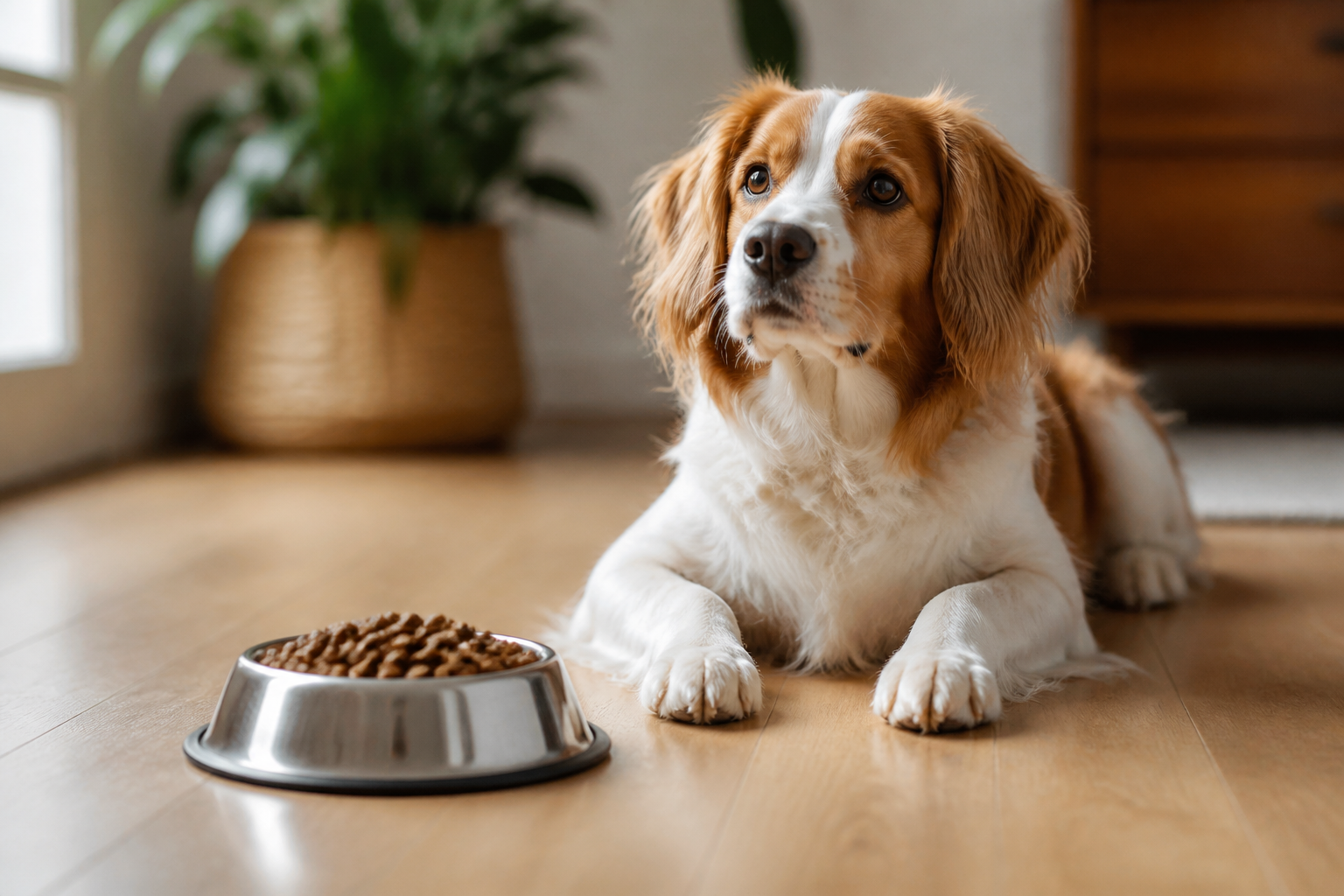
You are standing in the kitchen, measuring cup in hand, looking at your dog as they wag their tail in anticipation. You want to make sure they are getting enough energy to fuel their zoomies but not so much that they start to lose their waistline. For owners of small to medium dogs, getting the portion size exactly right is a daily puzzle. A 20-pound dog is in a unique spot. They are not quite a toy breed, but they are certainly not a large dog, and a few extra kibbles every day can make a big difference over time. At BaxterBoo, we know that every dog has different needs based on their age and how much they run. This article covers how to calculate the right amount of dry food for your 20-pound companion. We will look at calorie counts, life stages, and how to tell if your dog is at their ideal weight.
Quick Answer: A typical adult dog weighing 20 pounds needs between 3/4 and 1 1/4 cups of dry food per day. This usually equals about 400 to 600 calories, but the exact amount depends on the calorie density of your specific kibble and your dog's activity level.
Understanding the Calorie Needs of a 20-Pound Dog
The first thing to understand is that "cups" are not a universal measurement of energy. Every brand of dog food has a different number of calories per cup. Some high-energy performance foods might have 500 calories in a single cup, while a weight-management formula might only have 300. This is why looking at the calorie count, often listed as kcal/cup on the back of the bag, is more accurate than just following a general volume guide.
Most veterinarians use a baseline called the Resting Energy Requirement (RER). This is the amount of energy a dog needs to perform basic functions like breathing, digestion, and keeping their heart beating while at rest. For a 20-pound dog, the RER is approximately 350 to 400 calories per day. However, your dog does more than just rest. They walk, play, and maybe even bark at the mail carrier. These activities increase their daily caloric needs.
A typical, moderately active adult dog usually needs about 1.4 to 1.6 times their RER. For our 20-pound friend, this lands them in the range of 490 to 640 calories daily. If your dog is a "couch potato" who only goes for short strolls, they will stay toward the lower end. If they are an active pup who goes on long hikes, they will need more.
Key Takeaway: Focus on the total daily calories your dog needs rather than just the volume of food, as calorie density varies significantly between different dry food brands.
Factors That Influence Your Dog's Daily Portion
Weight is just the starting point. Several other factors play a role in how much energy your dog burns throughout the day. It is helpful to think of your dog's metabolism like an engine. Some engines are more efficient, and some burn through fuel much faster.
Activity Level and Exercise
This is the biggest variable for most owners. A dog that spends its day in a fenced yard or goes on two 30-minute walks will burn significantly more than a dog that stays indoors. If you find your dog is always hungry and losing weight, you likely need to increase their portion by 10 percent and monitor them for a few weeks. Conversely, if they are gaining weight, a small reduction is usually the first step.
Breed and Genetics
Certain breeds are known for having slower or faster metabolisms. For example, a 20-pound Terrier might be a ball of energy with a high metabolic rate. A 20-pound Pug or Basset Hound mix might have a much slower metabolism and a higher tendency to put on weight. You must adjust for these breed tendencies rather than sticking to a generic chart.
Spaying and Neutering
It is a well-known fact in the pet care world that spaying or neutering can slightly slow a dog's metabolism. Hormonal changes after these procedures mean your dog might require about 10 to 20 percent fewer calories than an intact dog of the same size. Many owners find they need to trim back the scoop size slightly after their dog is fixed to prevent unwanted weight gain.
Vet Tip: If your dog has a sudden change in appetite or weight despite no changes in their food, consult your veterinarian. These can be signs of underlying health issues like thyroid problems or diabetes that require professional diagnosis.
Life Stage Variations for a 20-Pound Dog
A 20-pound puppy has very different nutritional needs than a 20-pound senior dog. Even though they weigh the same on the scale, their bodies are doing completely different things with the nutrients they consume.
Feeding a 20-Pound Puppy
Puppies are growing rapidly. They need more protein, fat, and minerals like calcium to build strong bones and muscles. A puppy that will eventually weigh 20 pounds as an adult needs to be fed small, frequent meals. Because their stomachs are small, they cannot eat their entire daily requirement in one sitting. You will likely feed them three to four times a day using a formula specifically designed for puppies.
Adult Maintenance
Once a dog reaches adulthood, usually around 12 months for this size, their growth stops. Their needs shift toward maintaining their current weight and supporting their immune system. Most adult dogs do best with two meals per day. This helps keep their blood sugar stable and prevents them from getting too hungry between meals.
Senior Dog Needs
As dogs enter their senior years, their metabolism often slows down. They may also become less active due to joint stiffness or lower energy levels. Senior formulas often have fewer calories but higher quality protein to help maintain muscle mass. They also frequently include supplements like glucosamine for joint support.
Bottom line: Always choose a life-stage-specific formula to ensure your dog is getting the right balance of nutrients for their age and development.
How to Read a Dog Food Label Properly
The feeding chart on the back of your kibble bag is a legal requirement, but it is also a broad generalization. These charts are usually based on an "average" dog, which may not match your pet. Most charts provide a range, such as "3/4 to 1 1/4 cups for dogs weighing 15 to 25 pounds." If you are comparing formulas, browse our adult dog food selection for options with different calorie densities.
To get a more precise amount, follow these steps:
Step 1: Find the calorie count. / Look for the kcal/kg or kcal/cup listing on the bag, usually near the ingredient list.
Step 2: Determine your dog's activity level. / Decide if they are inactive, typical, or highly active to pick the right calorie goal.
Step 3: Do the math. / Divide your dog's daily calorie goal by the calories per cup in your chosen food.
Step 4: Split the total. / Divide that daily amount into two or three meals to keep your dog satisfied throughout the day.
If the bag says the food has 400 calories per cup and your vet recommends 500 calories a day for your dog, you would feed exactly 1 1/4 cups. If you just guessed based on the chart, you might accidentally feed 1 1/2 cups, which is an extra 100 calories every day. Over a month, that is 3,000 extra calories, which is nearly a full pound of weight gain for a small dog.
For another look at portion planning, read our guide to daily dry dog food amounts.
Health Conditions and Prescription Diets
Sometimes, a standard bag of dry food is not enough to manage a dog's specific health needs. If your dog is struggling with chronic conditions like skin allergies, kidney disease, or significant obesity, your vet may recommend a prescription diet. These foods are formulated with precise levels of nutrients to manage medical issues.
Our BaxterBoo pharmacy carries a wide variety of FDA-approved medications and prescription pet foods through our partnership with Pet's Choice. If your 20-pound dog needs a specialized diet like Farmina Vet Life for weight management or a specific kidney support formula, you can fulfill those requirements through us. These diets are carefully balanced, and the feeding amounts are often very strict to ensure the medical treatment works effectively.
Managing a health condition often involves more than just food. It may include supplements or ongoing medications for things like flea and tick protection or heartworm prevention. Keeping your dog at a healthy weight is one of the best ways to support their overall wellness and make managing these conditions easier.
Vet Tip: Always follow your veterinarian's specific instructions when feeding a prescription diet. These foods are considered part of a medical treatment plan and should not be mixed with other foods or treats without professional advice.
Monitoring Your Dog's Body Condition
The scale is a helpful tool, but it does not tell the whole story. Muscle is heavier than fat, so a fit, muscular dog might weigh the same as a dog with a high body fat percentage. Learning how to check your dog's body condition score at home is a great way to manage their feeding routine.
The Rib Test
Place both of your hands on your dog's ribcage. You should be able to feel their ribs easily under a thin layer of fat. It should feel like the back of your hand when you make a fist. If you have to press hard to find the ribs, your dog is likely carrying too much weight. If the ribs are highly visible and feel sharp, they may be underweight.
The Waistline Check
Look at your dog from above while they are standing. They should have a visible waistline that tucks in behind the ribs. When looking from the side, their belly should tuck upward toward their hind legs. A straight line from the chest to the back legs or a bulging belly usually means it is time to reduce their daily kibble.
Adjusting the Scoop
If your dog's body condition changes, do not be afraid to adjust their food. A small change, like removing two tablespoons of kibble from each meal, can make a significant difference over a few weeks. Consistency is the key to seeing results.
For more guidance, explore this body condition and pet weight management guide.
Key Takeaway: Use visual and tactile checks like the rib test and waistline check to supplement the number you see on the scale.
Managing Treats and Table Scraps
One of the most common reasons a 20-pound dog gains weight is "hidden" calories from treats. It is very easy to forget the biscuit you gave them after a walk or the piece of cheese that fell on the floor. For a small dog, these extras add up fast.
A single medium-sized dog biscuit can contain 30 to 50 calories. If your dog only needs 500 calories a day, two biscuits account for 10 percent of their entire daily intake. If you do not reduce their dinner portion to compensate, they will gain weight.
A good rule of thumb is the 10 percent rule. No more than 10 percent of your dog's daily calories should come from treats. For a 20-pound dog, that is about 50 calories. You can make treats more "valuable" by breaking them into smaller pieces or using low-calorie options like plain green beans or small pieces of carrot. Browse our dog treats collection for reward options you can portion carefully.
If you are using the BaxterBoo Autoship program to stay stocked up on your dog's favorite healthy treats, you can easily plan their monthly "snack budget." Using Autoship also ensures you never run out of their primary kibble, which helps prevent those last-minute runs to the store where you might end up buying a different, higher-calorie brand.
Bottom line: Account for every treat and scrap of food your dog eats to ensure their total daily caloric intake remains within a healthy range.
The Importance of Precise Measuring
Many owners use a random coffee mug or a plastic scoop that comes inside a supplement container to measure their dog's food. These are rarely accurate and can lead to overfeeding. A "cup" in a recipe is a specific volume, and the same applies to dog food charts.
Using a standard, leveled-off measuring cup is the best way to be consistent. Even better is using a digital kitchen scale to weigh the food in grams. Many high-quality brands like Open Farm or Stella and Chewy's provide gram measurements on their packaging. Weighing food eliminates the "heaping scoop" error and is the most precise way to manage a dog's weight.
If multiple people in your household feed the dog, make sure everyone is on the same page. Use one specific measuring tool and agree on exactly how full it should be. This prevents the dog from accidentally getting "double-dinners" or extra-large portions when someone else is in charge of the scoop.
For additional measuring guidance, see this dry dog food measurement article.
Note: Small errors in measuring can lead to a 10 to 20 percent increase in daily calories, which is the primary cause of gradual weight gain in small and medium-sized dogs.
Transitioning to a New Dry Food
If you decide to switch your dog to a new brand of dry food, perhaps one with better ingredients or a lower calorie count, you must do it slowly. A dog's digestive system needs time to adjust to new protein sources and fiber levels.
Step 1: Mix 25 percent new food with 75 percent old food. / Do this for two to three days and watch for any signs of an upset stomach.
Step 2: Move to a 50/50 split. / Continue this for another two to three days if your dog's stools remain firm.
Step 3: Mix 75 percent new food with 25 percent old food. / Use this ratio for the final two days of the transition.
Step 4: Transition to 100 percent new food. / Monitor your dog's energy and coat quality over the next month to ensure the new food suits them.
A slow transition prevents diarrhea and gas, making the change much easier for both you and your pet. It also helps you see how the new calorie density affects your dog's weight before you commit to a long-term portion size.
Read this guide to transitioning a dog to a new food for another perspective on gradual food changes.
Keeping Your Dog Healthy for the Long Term
Feeding your 20-pound dog the right amount of dry food is an investment in their future. Dogs that maintain a healthy weight live longer, have fewer joint problems, and are less likely to develop chronic diseases. It might feel like you are being "mean" by not giving them a second scoop, but you are actually giving them the gift of a longer, more active life.
Check your dog's weight once a month. You can do this at home by weighing yourself on a scale, then weighing yourself while holding the dog. Subtract your weight from the total to get the dog's weight. Keep a small log of these numbers so you can spot trends early. If you see the weight creeping up over two or three months, it is much easier to fix it then than it is to help a dog lose five pounds later.
Trust BaxterBoo to provide the high-quality foods and expert guidance you need to keep your pet thriving. Whether you are looking for a high-protein kibble for an active pup or a prescription diet for a senior dog, we have the selection to support your dog through every stage of their life. You can also compare nutrition approaches in our dry dog food nutrition guide.
Key Takeaway: Consistent monitoring and small adjustments to food portions are the most effective ways to maintain your dog's health and longevity.
FAQ
Is 1 cup of dry food enough for a 20-pound dog?
For many 20-pound adult dogs with moderate activity levels, 1 cup of dry food per day is a perfect starting point. However, this depends entirely on the calories in that specific cup. If the food is very dense, 1 cup might be too much, whereas a "light" formula might require closer to 1 1/2 cups to meet their needs.
How many calories does a 20-pound dog need daily?
A typical adult 20-pound dog needs between 400 and 600 calories per day. Inactive or senior dogs will stay closer to the 400-calorie mark, while very active dogs or those that are intact may need 600 or more. It is always best to start in the middle and adjust based on your dog's body condition.
How many times a day should I feed my 20-pound dog?
Most veterinarians recommend feeding adult dogs twice per day, once in the morning and once in the evening. This schedule helps prevent hunger-related bile vomiting and keeps their energy levels stable. Puppies of the same weight should be fed three to four times per day because they have higher energy needs and smaller stomachs.
Should I count treats in my dog's daily food amount?
Yes, you should always count treats as part of your dog's total daily calories. Treats should never make up more than 10 percent of their daily intake. If you give your dog several treats throughout the day, you should reduce their kibble portions at mealtime to keep their total calories balanced and prevent weight gain.






