
 Save 15% on your 1st Autoship learn more

 Email us
 Live Chat
 FAQs
FAQs





Introduction
You stand in the kitchen with a fresh bag of kibble while your 50 lb dog wags their tail in anticipation. You want to make sure they get enough energy for those long afternoon walks without overfilling the bowl. Finding the right balance is one of the most important parts of daily care. At BaxterBoo, we have helped pet owners navigate nutrition since 2006. We understand that every dog is an individual with unique needs. This guide explains how to calculate the right portion for your medium to large dog based on their age, lifestyle, and health. By the end of this article, you will know exactly how to adjust your dog's daily intake to keep them at a healthy weight.
Quick Answer: Most healthy 50 lb adult dogs require between 2 and 3 cups of dry food per day. This amount depends heavily on the calorie count of your specific brand and your dog's daily activity level.
The Core Factors for a 50 lb Dog
Weight is a helpful starting point, but it is not the only number that matters. Two dogs can both weigh 50 lbs but have vastly different nutritional requirements. One might be a high-energy hunting breed that spends hours running. The other might be a senior dog who prefers the comfort of the couch. If you want to browse food options built for everyday feeding, start with our dog food category.
Several key elements determine the exact scoop size:
- Calorie density of the food: Some kibbles have 300 calories per cup, while others have 500.
- Metabolic rate: Just like humans, some dogs burn calories faster than others.
- Spay or neuter status: Fixed dogs often require slightly fewer calories because their metabolism slows down.
- Environment: Dogs living in cold climates may burn more energy to stay warm.
Key Takeaway: Always use the feeding chart on your specific bag as a baseline, as calorie counts vary significantly between brands.
Understanding Calorie Density
Not all dry food is created equal. A 50 lb dog needs a specific number of calories per day, usually ranging from 1,000 to 1,300 for a typical adult. If you feed a calorie-dense brand like Orijen or Acana, the volume of food will be smaller. If you feed a weight management formula from Farmina or Royal Canin, the volume might be larger to help the dog feel full. For a closer look at one of the brands mentioned here, you can explore our selection of Orijen products.
When you look at the back of the bag, look for the "kcal/kg" or "kcal/cup" measurement. This tells you how much energy is packed into every scoop. If you switch brands, you must re-calculate the portion. Never assume that one cup of a new food equals one cup of the old food.
Life Stages and Portions
A 50 lb dog has different needs depending on where they are in their life journey. Age is a major factor in how their body processes nutrients.
The 50 lb Adult Dog
Most dogs reach their adult weight by 12 to 18 months. At this stage, the goal is maintenance. You want to provide enough protein and fat to support muscle mass and coat health without adding extra body fat. For a typical adult dog with moderate activity, 2.5 cups is a common starting point.
The 50 lb Senior Dog
As dogs age, they usually become less active. Their joints might start to feel stiff, and they may spend more time napping. Senior dogs often benefit from foods with fewer calories but higher levels of fiber or joint support. Brands like Cosequin or Zesty Paws can be used alongside their diet to support mobility. If your senior dog has specific health needs, our dog healthcare category is a helpful place to browse supportive options.
The 50 lb Puppy
If you have a puppy that already weighs 50 lbs, you likely have a large breed. These puppies are still growing and require more calories than an adult of the same weight. However, it is vital not to overfeed large breed puppies. Growing too fast can put stress on developing bones and joints. If you are making changes for a younger dog, this guide to switching dry to wet dog food covers a gradual transition plan that can also help with other diet changes.
Vet Tip: Consult your veterinarian to determine your dog's ideal Body Condition Score. This is more accurate than weight alone for deciding if your dog is eating the right amount.
Measuring for Success
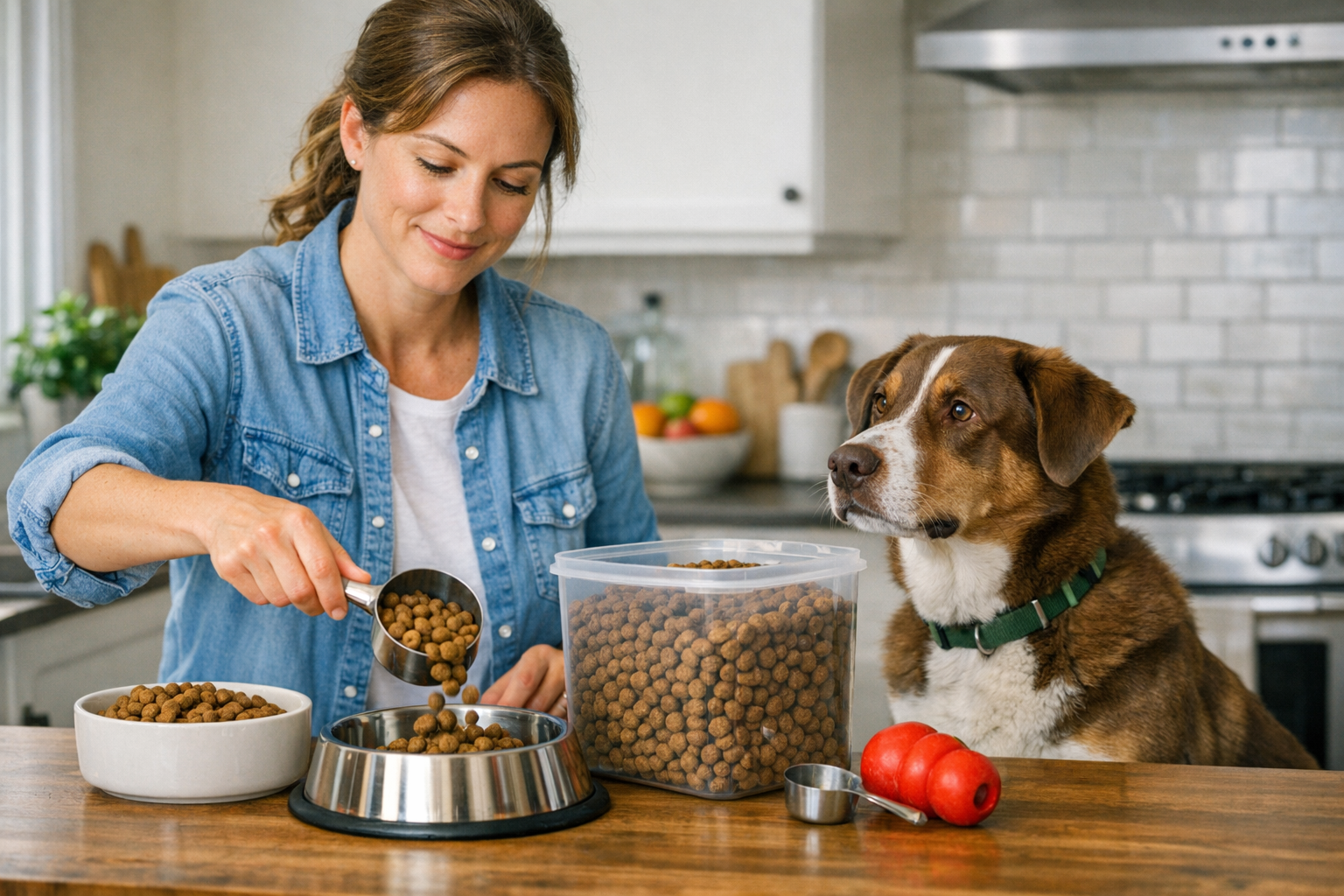
Precision matters when feeding your dog. Many owners use a generic plastic cup or a coffee mug to scoop food. This often leads to overfeeding. A small extra amount every day can lead to significant weight gain over a year. If you are looking for another practical portioning reference, this dry food feeding guide is a useful companion piece.
Follow these steps for accurate feeding: Step 1: Use a standard kitchen measuring cup. / This ensures you are actually giving the volume recommended on the bag. Step 2: Level the scoop. / Do not use a "heaping" scoop, as this can add 20 percent more calories than intended. Step 3: Divide the total daily amount. / If the bag suggests 3 cups, give 1.5 cups in the morning and 1.5 cups in the evening.
The Role of Activity Levels
Activity level is the biggest variable in the feeding equation. A 50 lb dog that goes for a three-mile run every morning will need significantly more food than a dog that only walks around the block.
- Low Activity: Less than 30 minutes of slow walking per day.
- Moderate Activity: 30 to 60 minutes of active play or walking.
- High Activity: Working dogs or those doing intense hiking or agility training.
If your dog is highly active, you may need to increase their portion by 10 to 20 percent. If they are mostly sedentary, you may need to decrease it.
Monitoring Your Dog's Weight
The best way to know if you are feeding the right amount is to look at your dog. You should be able to feel their ribs easily under a thin layer of fat. If you have to press hard to find the ribs, they are likely carrying extra weight. When looking from above, your dog should have a visible waistline behind the ribcage. If you are watching for weight changes while adjusting portions, this pet weight management article offers another helpful perspective.
If your dog needs to lose weight, avoid cutting their food drastically. This can lead to nutritional deficiencies. Instead, talk to your vet about a weight management plan. We carry a variety of healthy, low-calorie treats and weight-specific foods to help.
Key Takeaway: Visual checks are more important than the scale. Adjust food by small increments of 10 percent and wait two weeks to see the results.
Treats and Extras
Treats should never make up more than 10 percent of your dog's daily caloric intake. If you give a large dental chew or several training treats, you must reduce the amount of dry food in the bowl. Many owners forget to count these extra calories. To keep treat calories in check, you can browse our dog treats category.
If you use treats for training, consider using a portion of their daily dry food instead of high-calorie biscuits. This keeps the total calories balanced while still rewarding good behavior. For a lower-calorie training option, these Terrific Trainers are a practical example.
When to Consult a Professional
Changes in appetite or weight can sometimes signal underlying health issues. If your dog is suddenly gaining weight despite no changes in food, or if they seem constantly hungry, it is time for a checkup. If your dog needs prescription support, our pharmacy for dogs is the place to start.
Our pharmacy carries FDA-approved medications for various conditions that can affect metabolism, such as thyroid issues. Always work with your veterinarian before switching to a prescription diet or starting new medications.
Vet Tip: If your dog is consistently leaving food behind or seems uninterested in eating, visit your vet to rule out dental pain or digestive issues.
Transitioning to New Food
If you decide to change your dog's kibble, do it slowly over 7 to 10 days. This prevents upset stomachs and allows you to monitor how the new calorie count affects their weight. For another step-by-step approach, this freeze-dried feeding guide explains how concentrated diets affect portions.
- Days 1-3: 25% new food, 75% old food.
- Days 4-6: 50% new food, 50% old food.
- Days 7-9: 75% new food, 25% old food.
- Day 10: 100% new food.
Watch your dog's energy levels and stool consistency during this time. We carry over 500 trusted brands like Stella and Chewy's, NutriSource, and Open Farm to give you plenty of high-quality options for this transition.
Feeding Schedules
Most owners of 50 lb dogs find that two meals a day work best. This keeps the metabolism steady and prevents the dog from getting too hungry between meals. Some dogs, especially those prone to bloating, may benefit from three smaller meals. If you want to compare portioning advice across dog sizes, this feeding guide for smaller dogs is a useful related read.
Avoid "free feeding," which is leaving a bowl of food out all day. This makes it impossible to track exactly how much your dog is eating. It also makes it harder to notice a loss of appetite, which is often the first sign of illness.
Bottom line: Controlled, measured meals are the best way to manage your dog's weight and monitor their overall health.
Summary of Feeding a 50 lb Dog
Managing the diet of a 50 lb dog requires a mix of following instructions and observing your pet. Start with the bag's recommendations, use a real measuring cup, and adjust based on what you see in the mirror.
- Use the 2 to 3-cup range as a general guide for adults.
- Factor in treats as part of the total daily calories.
- Adjust for life stages like puppyhood or senior years.
- Monitor body condition regularly.
At BaxterBoo, we are committed to providing the gear and nutrition you need for every stage of your dog's life. Whether you are looking for a new high-protein kibble or need to fill a prescription through our pharmacy, we are here to help. Consider signing up for our Autoship programme to ensure you never run out of your dog's favorite food while saving on every order, and check out the MVP Rewards programme for even more value on future purchases.
FAQ
Is 4 cups of food too much for a 50 lb dog?
For most 50 lb dogs, 4 cups of dry food is likely too much and could lead to obesity. Most standard adult maintenance foods recommend between 2 and 3 cups for this weight range. However, if the food is very low in calories or the dog is an elite athlete, 4 cups might be appropriate under veterinary supervision.
How many calories does a 50 lb dog need daily?
A typical, moderately active adult dog weighing 50 lbs needs approximately 1,100 to 1,300 calories per day. This number can drop to 900 calories for senior dogs or inactive pets. Active working dogs may require 1,500 calories or more to maintain their weight.
Should I feed my 50 lb dog once or twice a day?
Feeding twice a day is generally recommended for a 50 lb dog. Dividing the food into two meals helps with digestion and keeps your dog from feeling hungry during the day. It also reduces the risk of bloat, which can be a concern for medium and large-sized breeds.
How do I know if my dog is still hungry or just begging?
Many dogs will beg for food even if they have had a full meal. Check your dog's body condition by feeling their ribs and looking for a waistline. If they are at a healthy weight and you are feeding the recommended amount, the begging is likely a learned behavior rather than a sign of true hunger.






