
 Save 15% on your 1st Autoship learn more

 Email us
 Live Chat
 FAQs
FAQs





Introduction
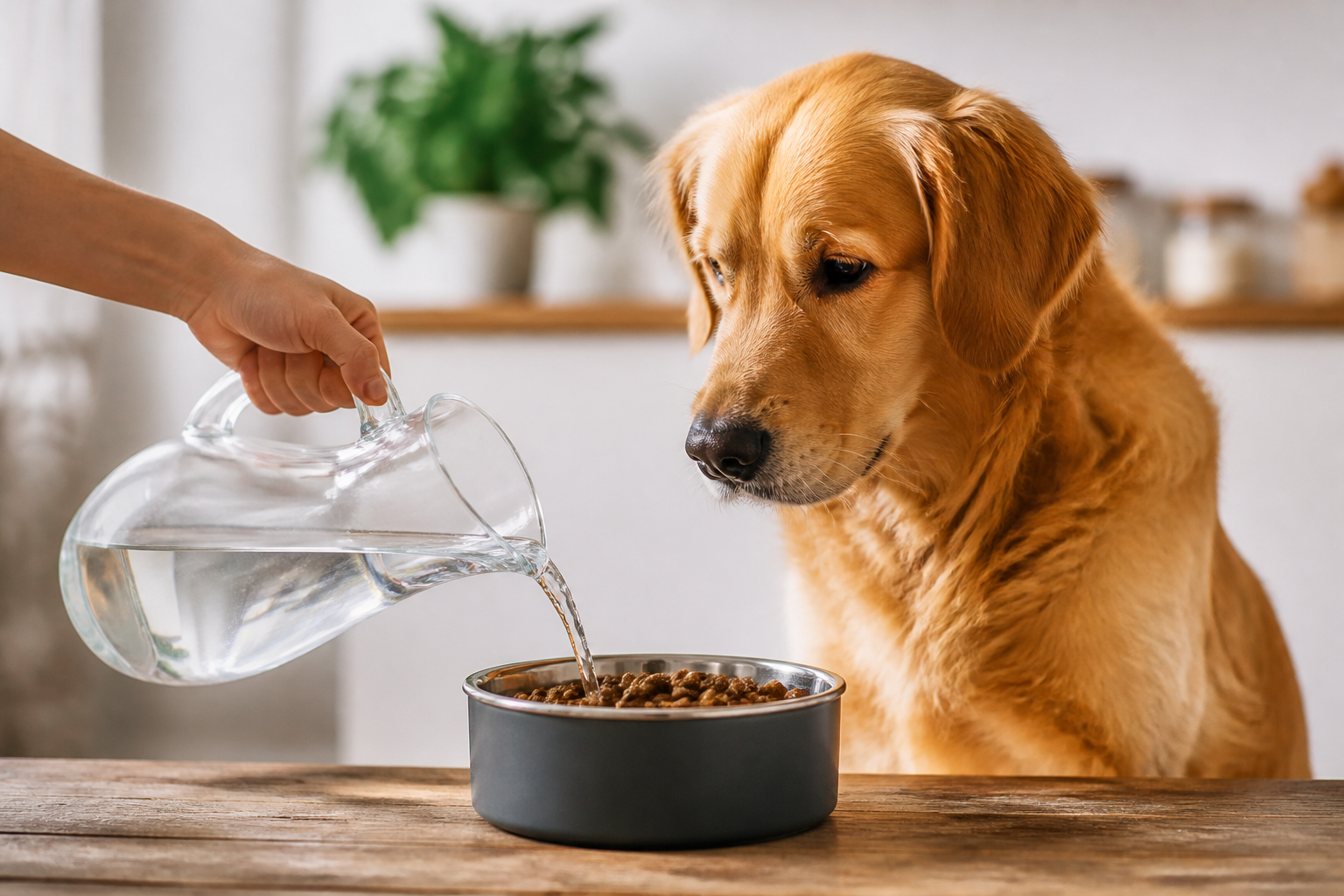
You are standing in your kitchen at mealtime, looking down at a bowl of dry, crunchy kibble. Perhaps you have noticed your dog seems less than excited about their dinner, or you are worried they are not drinking enough from their water bowl. At BaxterBoo, we hear from pet owners every day who want to know if adding a splash of water to the bowl is a good idea. It is a simple question with a few different answers depending on your dog's age, dental health, and eating habits.
This guide will explain the exact ratios you should use when mixing water with dry food. We will also cover the benefits of hydration, how to improve the flavor for picky eaters, and when you should be careful about leaving wet food out. Whether you have a growing puppy or a senior dog with sensitive teeth, finding the right balance of moisture can make mealtime the highlight of their day.
Why You Should Consider Adding Water
Dry kibble is a convenient and nutrient-dense way to feed your dog. However, the extrusion process used to make most dry foods removes almost all moisture. Most kibble only contains about 10 percent water. In the wild, a dog’s natural diet would contain significantly more moisture. Adding water back into the bowl helps bridge this gap.
Hydration is the most obvious reason to add water. Many dogs are "lazy drinkers" who do not visit their water bowls as often as they should. By adding water directly to their food, you ensure they are getting a baseline level of hydration twice a day. This is particularly helpful for dogs prone to urinary tract issues or those who live in hot climates.
Quick Answer: For a standard meal, add about 1/4 cup of water for every 1 cup of dry kibble. If you want to soften the food completely for a senior dog or puppy, use a 1:1 ratio of equal parts water and food.
The Ideal Ratios for Every Need
There is no single rule for how much water to add because every dog has different preferences. Some dogs love a crunchy meal with just a hint of "gravy" at the bottom. Others prefer a soft, mushy texture that resembles canned food. You can compare different options in our dry dog food category.
The Flavor Boost Ratio (1:4)
If your dog is healthy and has no trouble chewing, you likely only want to enhance the flavor. Use one part water to four parts kibble. For example, if you feed two cups of food, add half a cup of water. This creates a light coating that releases the aromas of the fats and proteins in the food without making the kibble soggy.
The Full Hydration Ratio (1:1)
This ratio is best for dogs that need a lot of extra moisture. Mix one cup of water with one cup of food. You will need to let this sit for several minutes so the kibble can absorb the liquid. This results in a very soft texture that is perfect for dogs with missing teeth or those recovering from a procedure.
The Picky Eater Ratio (2:1)
Some dogs are extremely focused on scent. If you have a dog that turns their nose up at dry food, try using a small amount of warm water to create a strong aroma. You do not need much liquid here. Just enough to dampen the surface of every nugget will help the "meaty" smell travel through the air.
Key Takeaway: Start with a small amount of water and observe your dog's reaction. It is easier to add more water than it is to fix a bowl of "cereal" that your dog refuses to touch.
Temperature and Water Quality
The type of water you use matters just as much as the amount. We always recommend using filtered water if possible. If you would not drink the water from your tap due to a heavy chlorine scent or mineral taste, your dog might feel the same way. Their sense of smell is much stronger than ours, and they can detect chemicals in the water that we might miss.
Use Warm Water for Aroma
Warm water is almost always better than cold water for mixing. Heat helps to break down the surface fats on the kibble. This releases the smells that trigger a dog's appetite. However, you must be careful with the temperature.
Step 1: Test the water temperature on your wrist. It should feel warm, not hot.
Step 2: Pour the water over the kibble and stir gently.
Step 3: Let it sit for at least two minutes to ensure the temperature is even throughout the bowl.
Avoid Boiling Water
Never use boiling water to soak kibble. High heat can actually damage some of the heat-sensitive vitamins and probiotics that are sprayed onto the food after the cooking process. It also creates a burn risk for your dog’s mouth and throat.
How Long Should You Soak the Food?
Patience is key when adding water to dry dog food. If you serve the bowl immediately, the water will simply sit at the bottom. While some dogs will lap up the "kibble tea" first, others will be frustrated by the floating pieces.
For a slight soften, wait 2 to 5 minutes. This allows the outer shell of the kibble to become tender while keeping the center crunchy. This is often the best of both worlds for younger adult dogs.
For a complete transformation into soft food, wait 10 to 15 minutes. During this time, the kibble will expand significantly. You might be surprised at how much larger the pieces become. This expansion is actually a benefit because it helps your dog feel fuller without adding extra calories.
Vet Tip: If your dog is a "gulper" who eats too fast, adding water and soaking the food for 10 minutes can slow them down. The softer texture and increased volume make it harder for them to inhale the food without chewing.
For more guidance on freshness and storage, read how long dry dog food can stay fresh.
Benefits for Senior Dogs and Puppies
Life stages play a huge role in nutritional needs. We often suggest adding water for the youngest and oldest members of the pack. If you are feeding a young dog, our puppy collection is a helpful place to compare age-appropriate options.
Helping Puppies Transition
When puppies move from mother's milk to solid food, their teeth are tiny and their jaws are not yet strong. Hard kibble can be intimidating. By adding warm water and soaking the food into a "mash," you make the transition much easier. It also ensures they stay hydrated during a period of rapid growth.
For additional feeding guidance, see how much dry dog food to feed a puppy.
Comfort for Seniors
As dogs age, they often develop dental disease or lose teeth. Chewing hard rocks of kibble can become painful. Many senior dogs start eating less simply because it hurts to chew. Adding water allows them to continue eating the high-quality dry food they enjoy without the physical discomfort.
Furthermore, senior dogs are at a higher risk for kidney issues. Increased water intake is one of the best ways to support kidney function. If your vet has recommended a specific prescription diet for kidney or urinary health, our dog pharmacy carries these options. Adding water to these specialized diets can further support their therapeutic goals.
You can also compare feeding formats in our guide to wet and dry food for senior dogs.
The Myth of Kibble and Dental Health
One of the most common reasons owners avoid adding water is the fear that they are "ruining" the dental benefits of dry food. There is a long-standing belief that the crunch of kibble scrapes plaque off a dog's teeth.
While some specialized dental diets are designed to do this, most standard kibble does very little for dental hygiene. Think of it like a human eating a cracker. The cracker does not clean your teeth; in fact, the carbohydrates in the cracker often stick to your teeth and feed bacteria.
If you are worried about your dog's teeth, adding water will not make things significantly worse. It is much better to focus on regular brushing or dental chews rather than relying on the texture of dry food. Providing a meal that is easy to digest and keeps them hydrated is a much higher priority for their overall wellness.
Safety and Spoilage
The moment you add water to dry food, you change the shelf life of that meal. Dry kibble is shelf-stable because it lacks moisture. Once you introduce water, you create a perfect environment for bacteria and mold to grow.
The 60-Minute Rule
You should never leave moistened kibble out for more than an hour. If your dog is a "grazer" who likes to take a few bites and come back later, adding water might not be the best choice. In warm weather, bacteria can begin to multiply even faster.
Proper Cleanup
Moistened food tends to leave a residue on the sides of the bowl. This residue can quickly become "caked on" and difficult to remove. It also becomes a breeding ground for germs. Always wash your dog's bowl with hot, soapy water after every meal involving water or wet toppers.
Upgrading the Liquid
Water is the most cost-effective choice, but it is not your only option. You can use other liquids to add even more nutrition to the bowl. Our dog food supplements and toppers include options that can add flavor to a meal.
- Bone Broth: This is a favorite at BaxterBoo for picky eaters. It is packed with collagen and amino acids that support joint health. Ensure you use a broth specifically made for dogs, as human versions often contain onions, garlic, and excessive salt.
- Goat Milk: Often called "universal milk," raw goat milk is easy to digest and provides a boost of probiotics. It is excellent for dogs with sensitive stomachs.
- Canned Food Mixers: If you do not want to use plain water, mixing a few tablespoons of wet food with a little water creates a rich gravy that covers every piece of kibble.
If your dog is struggling with weight management, plain water is the best choice. It increases the volume of the food, helping them feel satisfied on fewer calories. For dogs on weight loss diets like Farmina Vet Life, adding water can prevent the "begging" that often happens between meals.
How to Start the Transition
If your dog has always eaten dry food, do not dump a cup of water into their bowl tonight. Some dogs are suspicious of change.
Step 1: Start with just a tablespoon of warm water drizzled over the top.
Step 2: Gradually increase the amount of water over the course of a week.
Step 3: Pay attention to their digestion. While adding water usually helps, a sudden change in texture can occasionally cause soft stools in very sensitive dogs.
Step 4: Once you reach your desired ratio, stick with it to provide consistency.
For more advice about changing diets gradually, read how to transition your dog to a new food.
Key Takeaway: Consistency is vital for a dog's digestive system. Once you find a water-to-kibble ratio that works, try to keep it the same for every meal.
When to Talk to Your Veterinarian
While adding water is generally safe and healthy, changes in eating habits can sometimes signal underlying health issues. If your dog suddenly refuses to eat dry food unless it is soaked, they may have a dental abscess or a fractured tooth. Similarly, if your dog is suddenly drinking excessive amounts of water, it could be a sign of diabetes or kidney disease.
Vet Tip: Always consult your veterinarian before making major changes to a dog's diet, especially if they are on a prescription therapeutic food. Some medications or conditions require very specific moisture levels.
If your vet determines that your dog needs a specialized diet or ongoing medication for a condition like kidney stones or heart health, we can help. Our pharmacy provides prescription diets and healthcare products for dogs.
Enhancing the Feeding Experience
At BaxterBoo, we believe that mealtime is more than just a way to deliver calories. It is an opportunity to support your dog’s long-term health and strengthen your bond. Adding water is a simple, no-cost way to make their food more digestible, more flavorful, and much more hydrating.
By paying attention to the ratios and ensuring the food is served fresh, you can solve many common feeding problems. You might find that your picky eater suddenly clears their bowl or your senior dog has more energy now that they are properly hydrated.
Bottom line: Adding water to kibble is a highly effective way to boost hydration and palatability, provided you serve it fresh and monitor your dog's preferences.
If your dog enjoys a particular food, our dry dog food feeding guide can help you compare other considerations.
FAQ
Can I add too much water to my dog's food?
Yes, adding too much water can turn the meal into a soup that some dogs find difficult to eat. If the food is floating and your dog has to "bob for kibble," you have likely overdone it. Start with a 1:4 ratio and only increase it if your dog seems to prefer a softer, mushier texture.
Is it okay to use cold water from the tap?
While cold water is safe, it does not release the aromas and fats as effectively as warm water. Many dogs are more interested in their food when it is warmed up because it smells more like real meat. If you use tap water, ensure it is filtered to remove any chemical smells that might discourage a picky eater.
Does adding water cause the food to spoil?
Once water is added to dry kibble, the clock starts ticking on its freshness. The moisture allows bacteria and mold to grow quickly. You should always discard any uneaten portion of moistened food after 60 minutes and wash the bowl thoroughly to prevent buildup.
Will soaking kibble help my dog lose weight?
Adding water can be a helpful tool for weight management because it increases the volume of the meal. The fiber in the kibble absorbs the water and expands, which helps your dog feel full and satisfied. This can reduce the amount of begging for treats between their scheduled mealtimes.






