
 Save 15% on your 1st Autoship learn more

 Email us
 Live Chat
 FAQs
FAQs





Introduction
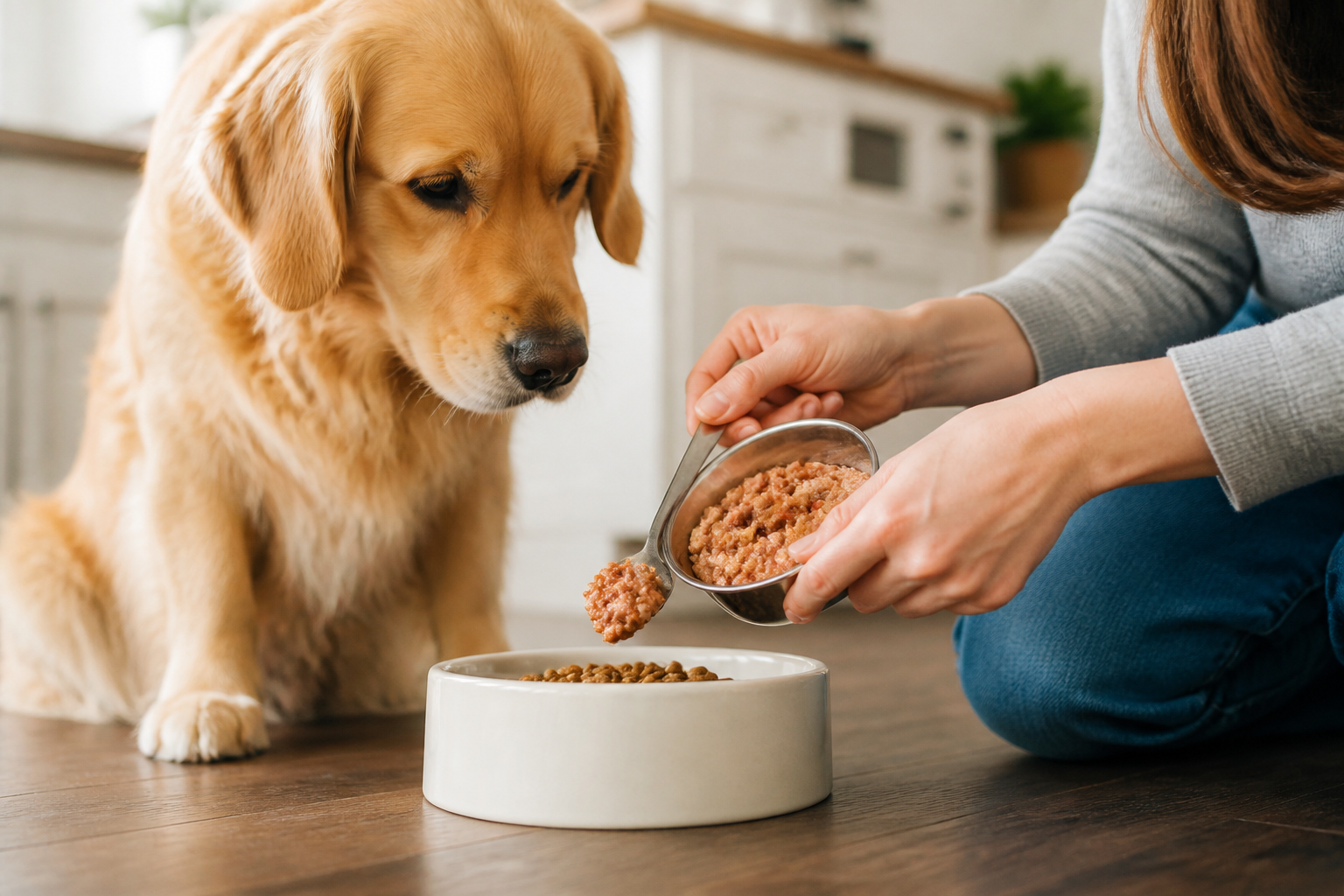
You stand over the dog bowl while your pup gives you that expectant look. Maybe they have grown bored of their standard kibble. Perhaps you are worried they are not drinking enough water during the hot Illinois summers. Mixing wet and dry food is one of the best ways to keep mealtime exciting while supporting your dog’s health. At BaxterBoo, we have helped thousands of pet owners find the perfect balance for their unique companions since 2006. This guide will help you navigate the math of calories and the benefits of different textures. We will cover how to calculate the right portions and how to transition safely. Finding the right mix ensures your dog stays at a healthy weight while enjoying every bite.
The Benefits of Mixed Feeding
Combining wet and dry dog food offers several advantages for your dog. It is often called mixed feeding. This approach provides the dental benefits of crunchy kibble alongside the high moisture content of canned food.
Dry kibble helps scrape away a small amount of plaque as your dog chews. Wet food provides a boost of hydration that is essential for kidney and urinary tract health. Many dogs find the aroma of wet food much more appealing than dry food alone. This makes it an excellent choice for picky eaters or senior dogs with a declining sense of smell.
Adding wet food can also make a meal feel more substantial without adding excessive calories if managed correctly. Wet food is generally less calorie-dense than dry food because it contains so much water. This can help a dog feel fuller while consuming fewer total calories.
Key Takeaway: Mixed feeding combines the dental perks of kibble with the hydration and taste of wet food to create a more satisfying meal.
Improving Palatability
If your dog is recovering from an illness or simply lacks an appetite, the rich scent of a quality wet food can help. Brands like Stella and Chewy’s or Open Farm offer stews and pates that act as a strong incentive. The gravy in these foods coats the dry kibble and creates a varied texture.
Boosting Hydration
Many dogs do not drink enough water from their bowls. This is especially true for certain breeds or older dogs. Since wet food can be up to 80 percent water, it is an easy way to sneak extra moisture into their diet. Better hydration supports digestion and helps the body flush out toxins through the kidneys.
For additional ideas about adding moisture to meals, read our guide to wetting dry dog food for better digestion and hydration.
Doing the Math: How Much to Mix
The most common mistake owners make is adding wet food on top of a full portion of dry food. This leads to rapid weight gain. You must substitute a portion of the dry food for the wet food rather than simply adding to it.
As a general rule, dry dog food is about 3.5 times more calorie-dense than wet food by weight. This means you cannot swap one cup of dry food for one cup of wet food. If you do that, your dog will receive far fewer calories than they need.
Quick Answer: A common starting point is a 75/25 split. Replace 25 percent of your dog's daily dry food allowance with a nutritionally equivalent amount of wet food.
For a portion-conversion example, see our guide to how much wet dog food equals one cup of dry food.
Calculating Calories
Check the labels of both foods. Look for the "kcal/cup" on the dry food bag and "kcal/can" on the wet food.
- Determine your dog's total daily calorie needs with your vet.
- Decide on your ratio (such as 50 percent dry and 50 percent wet).
- Calculate how many calories that ratio represents for each food type.
- Measure the portions using a standard measuring cup or a kitchen scale.
| Food Type | Typical Calorie Density | Main Benefit |
|---|---|---|
| Dry Kibble | High (~350-450 kcal/cup) | Convenient, dental health |
| Wet / Canned | Low (~75-100 kcal/100g) | Hydration, taste |
| Mixed | Medium | Balance of both |
Vet Tip: Always use a standard measuring cup or scale. Guessing portions is the primary cause of pet obesity, even when feeding high-quality brands.
Explore our dog food category to compare wet and dry formulas.
Considering Your Dog’s Life Stage
The amount and type of food you mix will depend on your dog’s age and energy level. Puppies have very different requirements than senior dogs.
Puppies
Puppies need significant amounts of protein and fat to support their rapid growth. If you are mixing food for a puppy, both the wet and dry options must be labeled for growth or all life stages. Avoid mixing an adult wet food with a puppy dry food. This can unbalance the calcium and phosphorus levels required for bone development.
Adult Dogs
Most adult dogs do well on a maintenance diet. This is the stage where mixed feeding is easiest to implement. You can experiment with different flavors like lamb, beef, or fish.
Senior Dogs
Older dogs often face dental issues or a decreased appetite. They may also need fewer calories as their metabolism slows down. A higher ratio of wet food can be easier on sensitive teeth. We often suggest senior-specific formulas from brands like NutriSource or Farmina. These often include added joint support like glucosamine.
For another perspective on age and feeding choices, read about switching from dry to wet dog food.
Bottom line: Ensure both the wet and dry foods are formulated for your dog’s specific life stage to maintain nutritional balance.
Health Needs and the Pharmacy
Sometimes mixed feeding is not just about taste. It is about managing a medical condition. If your dog has been diagnosed with a health issue, your veterinarian might recommend a prescription diet.
Our pharmacy carries FDA-approved prescription pet foods through our partnership with Pet's Choice. This includes specialized diets for weight management, kidney health, or skin allergies. If you are using a therapeutic diet like Farmina Vet Life or Royal Canin Veterinary Diet, you must be careful about what you mix in.
Adding a standard grocery store wet food to a prescription dry food can dilute the medicinal benefits of the diet. For example, if your dog is on a low-protein kidney diet, adding a high-protein wet food can be dangerous. Always consult your vet before mixing anything with a prescription food.
- Check with your vet before mixing therapeutic diets.
- Use the BaxterBoo pharmacy for easy delivery of prescription wet and dry options.
- Ask about the Pet's Choice partnership for specific medication needs that might affect appetite.
Vet Tip: If your dog has a chronic condition like diabetes or kidney disease, consult your veterinarian before changing their food ratio. Small changes in calorie or mineral intake can significantly impact their treatment plan.
Our guide to mixing dry dog food with wet food offers another overview of mixed feeding.
How to Transition Your Dog
You should never switch your dog's diet overnight. Their digestive systems are sensitive to sudden changes. A slow transition helps prevent upset stomachs and diarrhea.
Step 1: Start with a small amount. / Add just a spoonful of wet food to their regular dry portion while reducing the dry food slightly.
Step 2: Monitor their reaction. / Watch for any signs of gas or loose stools over the next 48 hours.
Step 3: Gradually increase the wet food. / Over the course of 7 to 10 days, slowly move toward your target ratio of wet and dry.
Step 4: Consistency is key. / Once you find a ratio that works, try to keep it consistent to maintain a healthy gut microbiome.
Bottom line: A slow 10-day transition is the best way to avoid digestive upset when introducing wet food.
For a step-by-step timeline, review our advice on switching from dry to wet dog food.
Storage and Safety
When you start mixing food, you have to think about food safety. Dry kibble is shelf-stable and can sit out in a bowl for several hours. Wet food is different.
Once a can of wet food is opened, it must be refrigerated. It generally stays fresh for about three days if covered tightly. When you mix wet food into the dry kibble, you must pick up the bowl after about 30 minutes. Wet food left at room temperature can grow bacteria quickly.
If your dog is a "grazer" who likes to eat small amounts throughout the day, mixed feeding might be tricky. You may want to offer the mixed meal in the morning and evening, leaving only plain dry kibble out for snacking during the day.
Checklist for Safe Feeding
- Wash the food bowl daily with soap and water.
- Cover opened cans with a silicone lid or plastic wrap.
- Discard any mixed food that has been sitting out for more than an hour.
- Store dry kibble in its original bag inside an airtight container.
For more food-safety guidance, see how to wet dry dog food safely.
Quality Ingredients to Look For
When choosing a wet food to mix with your dry kibble, the ingredient list is your best friend. We recommend looking for whole protein sources like chicken, beef, or salmon as the first ingredient.
Avoid foods that rely heavily on "meat by-products" or "animal digest" as their primary protein. Brands like Acana, Orijen, and The Honest Kitchen prioritize transparent sourcing. If you see ingredients like blueberries, spinach, and sweet potatoes, those are great signs of a nutrient-dense wet food.
Understanding AAFCO Statements
Always look for the AAFCO (Association of American Feed Control Officials) statement on the label. It should say the food is "complete and balanced." This means the food has all the vitamins and minerals your dog needs. If a food is labeled as a "topper" or "supplementary," it is not a complete meal. You should only use those as a small treat, and they should not make up more than 10 percent of your dog's daily calories.
Key Takeaway: Only mix two foods that are both labeled as "complete and balanced" unless you are using a topper sparingly.
Managing Your Budget
Feeding a high-quality mixed diet can be more expensive than feeding dry kibble alone. However, there are ways to save without compromising on quality.
Buying larger cans is often more cost-effective than small pouches or trays. You can portion out the can and refrigerate or even freeze the extra for later. We also offer an Autoship program that provides savings on recurring deliveries. This ensures you never run out of your dog’s favorite wet food while keeping your costs down.
Additionally, our MVP Rewards program allows you to earn points on every purchase. These points can be used for future discounts on the 500+ brands we carry. Combining these programs makes it much more affordable to provide a premium mixed diet for your dog.
Troubleshooting Common Issues
Sometimes, despite your best efforts, things do not go perfectly.
My dog picks out the wet food and leaves the dry.
This is a common "selective eating" behavior. To fix this, try stirring the wet food into the kibble more thoroughly. You can even add a splash of warm water to create a consistent mush. This makes it impossible for the dog to separate the two.
My dog has loose stools.
This often happens if the transition was too fast or if the wet food is too rich. Try reducing the amount of wet food and increasing it more slowly over two weeks. If the problem persists, the specific brand may not agree with your dog's stomach.
My dog is gaining weight.
If your dog is putting on extra pounds, you are likely overestimating the calories in your mix. Go back to the labels and double-check your math. Even an extra 50 calories a day can lead to weight gain in smaller breeds.
Vet Tip: If your dog experiences persistent vomiting or diarrhea after a food change, stop the new food and contact your veterinarian. They can help rule out food sensitivities or underlying health issues.
Summary of Mixing Wet and Dry Dog Food
Mixing wet and dry dog food is an excellent way to improve your dog’s quality of life. It provides a variety of textures and flavors while ensuring they stay hydrated and healthy. Remember to focus on the calorie count rather than the volume of the food. Always choose high-quality, complete, and balanced formulas that match your dog’s life stage.
By taking a slow approach to the transition and monitoring your dog’s weight, you can create a meal plan that they will love. We are here to help you find the right combination of brands and formulas to keep your best friend thriving.
Whether you need a specialized prescription diet from our pharmacy or a premium kibble from our warehouse, we have the expertise to guide you. Start with a small change today and watch how much more your dog enjoys their dinner.
- Always measure both food types to avoid overfeeding.
- Transition slowly over 7 to 10 days.
- Store opened wet food in the refrigerator.
- Consult your vet for prescription or therapeutic diet mixing.
Bottom line: Successful mixed feeding requires balancing calories and choosing high-quality ingredients to match your dog's specific health needs.
For more help choosing the right formulas, explore our adult dog food selection. You can also sign up for Autoship to save on your favorite brands and ensure your pup never misses a meal.
FAQ
Can I mix different brands of wet and dry dog food?
Yes, you can mix different brands as long as both are labeled as complete and balanced by AAFCO. It is important to ensure that both foods are appropriate for your dog's life stage, such as puppy or senior formulas. Mixing brands can actually provide a wider variety of nutrients and flavors for your pet. Just be sure to monitor for any digestive sensitivity when introducing a new brand.
How long can I leave mixed wet and dry food in the bowl?
You should pick up any uneaten mixed food after about 30 to 60 minutes. Because wet food has a high moisture content, it can quickly become a breeding ground for bacteria when left at room temperature. Unlike plain dry kibble, which can sit out for much of the day, mixed food spoils quickly. Always wash the bowl thoroughly after every meal to maintain good hygiene.
Is it cheaper to mix wet and dry food than to feed only wet food?
Yes, mixed feeding is typically much more budget-friendly than a 100 percent wet food diet. Dry kibble is less expensive per calorie and can be bought in large, shelf-stable bags. By mixing in a smaller portion of wet food, you provide the flavor and hydration benefits without the high cost of feeding several cans per day. You can also use our MVP Rewards and Autoship programs to further reduce your monthly costs.
Does mixing wet food with dry food cause tooth decay?
Mixing wet food does not directly cause tooth decay, but wet food does not offer the same mechanical scraping action as dry kibble. Some people believe that wet food "sticks" to teeth more, but the most important factor for dental health is regular brushing and professional cleanings. If you are concerned about dental health, ensure the dry kibble portion of the mix is a high-quality, crunchy variety. You can also add dental treats or water additives to your dog's routine for extra protection.






