
 Save 15% on your 1st Autoship learn more

 Email us
 Live Chat
 FAQs
FAQs





Introduction
You might notice your senior dog hesitating over the food bowl or a puppy struggling to crunch through hard kibble. Perhaps your dog simply ignores their meal unless you add something special to it. These are common moments for pet owners, and learning how to soak dry dog food is a practical solution that addresses many of these daily challenges. At BaxterBoo, we see many pet parents looking for ways to improve their dog's hydration and mealtime comfort. This post covers the benefits of hydrating kibble, the best liquids to use, and safety tips to prevent spoilage. Adding moisture to dry food can improve digestion, support dental health, and make meals more appealing for picky eaters.
Quick Answer: Soak dry dog food by adding warm water or broth in a 1:1 ratio. Let it sit for 15 to 30 minutes until the kibble is soft and the liquid is absorbed. This makes the food easier to digest and more flavorful for your dog.
Why You Should Consider Soaking Dry Dog Food
Dry kibble is a convenient and nutrient-dense way to feed your pet, but it is very low in moisture. Most dry foods contain only about 10 percent water. In the wild, a dog’s natural diet would consist of much higher moisture levels. Adding liquid back into the food can bridge this gap.
One of the most immediate benefits is hydration. Some dogs are not proactive drinkers. If your dog rarely visits the water bowl, they may live in a state of mild dehydration. This can lead to urinary tract issues or put extra strain on the kidneys. By soaking their food, you ensure they get a significant portion of their daily water intake during mealtime. For more mealtime ideas, explore our dog food category.
Digestion is another major factor. When a dog eats dry kibble, their body must provide the moisture to break it down. If they bolt their food quickly, the kibble hits the stomach dry and then expands rapidly. This can cause discomfort or bloating. Pre-soaking allows the expansion to happen in the bowl rather than in your dog's gut.
Key Takeaway: Hydrating kibble supports kidney function and prevents the uncomfortable expansion of dry food in the digestive tract.
Helping Senior Dogs and Those with Dental Issues
As dogs age, their dental health often declines. Missing teeth, receding gums, or general sensitivity can make crunching hard kibble a painful chore. Many senior dogs start eating less simply because the physical act of chewing is difficult.
Soaking the food until it reaches a mash-like consistency allows these dogs to eat without pain. It also helps puppies that are currently teething. Those tiny mouths can get very sore when their adult teeth are coming in. Softened food provides the nutrition they need without irritating their sensitive gums. You can also read our guide to senior dogs and wet or dry food for another perspective on food texture and life-stage needs.
If your dog is managing a chronic health condition that requires a specific diet, such as those from Royal Canin or Farmina Vet Life, you may find that these prescription kibbles soak very well. Our dog pharmacy offers prescription pet medications and related care options. If your veterinarian has prescribed a medical diet for dental or digestive issues, soaking that food can make the transition much easier for a struggling senior pet.
Vet Tip: If your dog has persistent dental pain or refuses to eat even softened food, consult your veterinarian. Dental disease can lead to systemic infections if left untreated.
Step-by-Step Guide to Soaking Kibble
Soaking food is not complicated, but doing it correctly ensures the best texture and safety. You want the food to be soft but not necessarily a watery soup unless your dog prefers it that way.
Step 1: Measure the portion. / Place your dog's standard amount of dry food into a clean ceramic or stainless steel bowl.
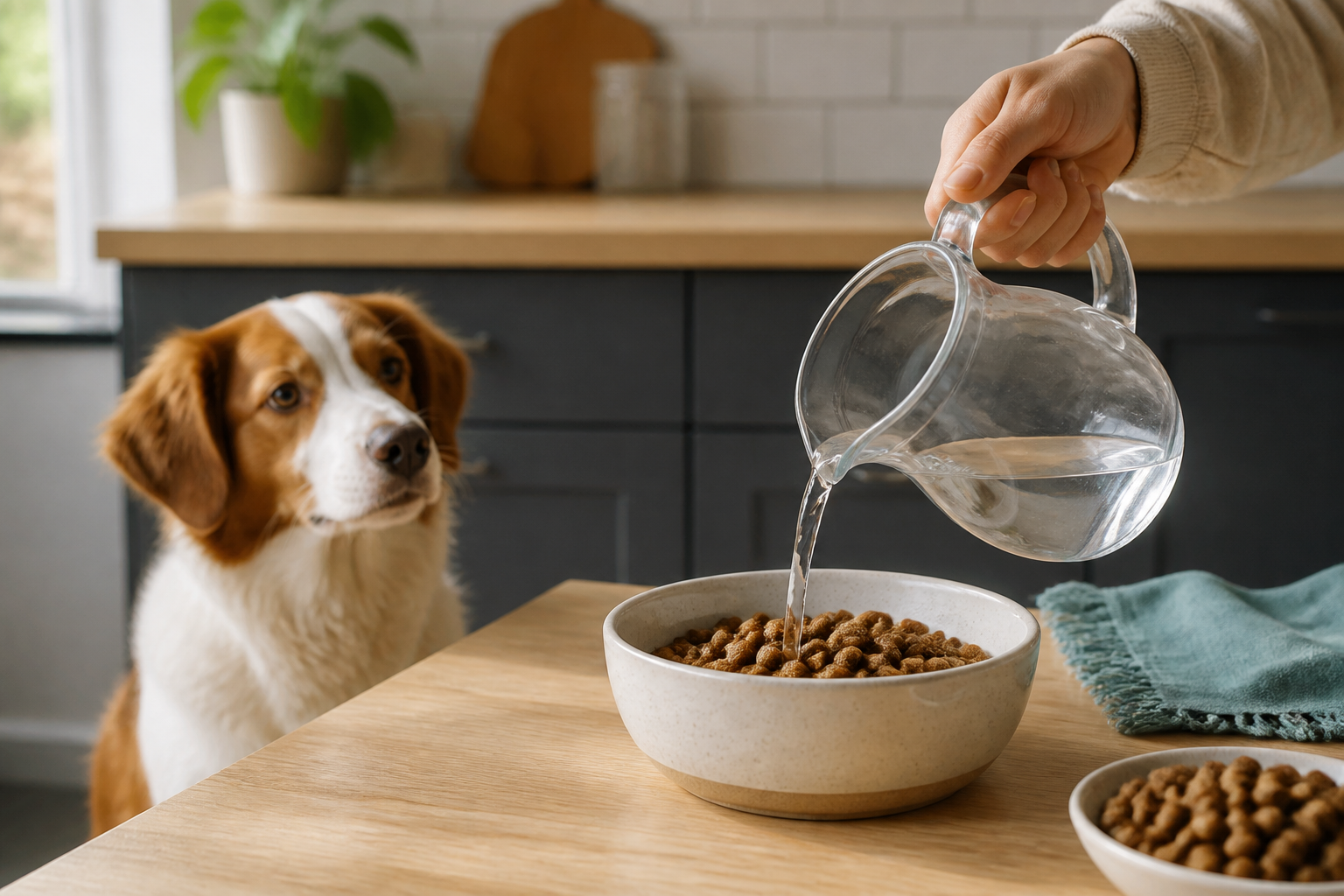
Step 2: Add the liquid. / Use warm water or low-sodium broth. A 1:1 ratio is usually a good starting point.
Step 3: Wait for absorption. / Let the bowl sit for 15 to 30 minutes. You will see the kibble double in size.
Step 4: Stir and serve. / Mix the food to distribute the moisture evenly and check the temperature before giving it to your dog.
If you are in a rush, using warmer water can speed up the process. However, you should never use boiling water. Extremely high temperatures can damage some of the heat-sensitive vitamins and probiotics found in premium brands like Open Farm or Stella and Chewy's. For another explanation of adding water to meals, read our guide to wetting dry dog food.
Enhancing Flavor for Picky Eaters
Some dogs are just bored with their food. Dry kibble does not have a strong scent until it is moistened. Adding warm liquid releases the fats and aromas within the food, making it smell much more like a fresh meal.
You do not have to stick to plain water. There are several nutritional liquids you can use to boost the appeal of the meal:
- Bone Broth: Use a dog-specific broth like those from The Honest Kitchen. Avoid human broths that contain onions, garlic, or high salt levels.
- Goat Milk: This is highly digestible and packed with probiotics. It is excellent for dogs with sensitive stomachs.
- Warm Water: The simplest and most cost-effective option for daily hydration.
For pet-safe toppers and broth options, browse our dog food supplement collection.
| Liquid Type | Best For | Main Benefit |
|---|---|---|
| Warm Water | Daily feeding | Hydration and cost-effective |
| Bone Broth | Picky eaters | High protein and joint support |
| Goat Milk | Sensitive stomachs | Probiotics and easy digestion |
| Salmon Oil + Water | Skin and coat | Omega fatty acids |
Key Takeaway: Using flavorful liquids like goat milk or bone broth can entice a reluctant eater while adding a nutritional boost to their meal.
Addressing Bloat and Fast Eaters
Bloat, or Gastric Dilatation-Volvulus (GDV), is a life-threatening condition where the stomach fills with gas and twists. While the exact causes are still studied, fast eating and the rapid expansion of dry food are often cited as risk factors. Large and deep-chested breeds are particularly at risk.
When a dog bolts dry kibble, they often swallow air along with the food. The dry pieces then absorb stomach acid and water, expanding quickly. By soaking the food first, you eliminate that secondary expansion inside the stomach. It also makes the food heavier and more difficult to "bolt," which can naturally slow down a fast eater.
We often recommend using a slow feeder bowl in combination with soaked food for dogs that eat too quickly. This combination ensures the food is already hydrated and forces the dog to take smaller, more controlled bites. You can also review our advice on wetting dry dog food for additional mealtime considerations.
Bottom line: Pre-expanding kibble in the bowl reduces the risk of sudden stomach distension in breeds prone to bloat.
Safety and Hygiene Considerations
One of the most important things to remember about soaking dog food is that it changes the shelf life of the meal. Once you add water to kibble, it becomes a perishable item. Bacteria thrive in warm, moist environments.
You should never leave soaked food out at room temperature for more than 30 to 60 minutes. If your dog does not finish their meal within that window, the leftovers must be discarded. This is why soaking is not a good option for dogs that like to "graze" throughout the day. If your dog is a slow eater, only soak small portions at a time.
Cleaning the bowl is also vital. Dry kibble leaves behind a fine dust, but soaked kibble leaves behind a sticky residue. This residue can quickly grow mold or bacteria if the bowl is not washed with hot, soapy water after every single meal. For more storage and handling guidance, see our article on switching from dry to wet dog food.
Vet Tip: Always wash your dog's bowl after they eat soaked food. Bacterial buildup can cause digestive upset or skin infections around the muzzle.
Transitioning Puppies to Solid Food
Soaking kibble is a standard part of the weaning process. When puppies move from their mother's milk to solids, their digestive systems are not ready for hard, dry nuggets.
Between four and eight weeks of age, puppies are usually fed a "gruel" made of high-quality puppy kibble soaked in warm water or puppy milk replacer. As the weeks go by, you gradually reduce the amount of water and the soaking time. This allows their teeth and stomachs to adjust slowly to the texture of dry food. Our Puppy Shop can help you find age-appropriate essentials.
Even after they are fully transitioned, many owners continue to add a splash of water to ensure the puppy stays hydrated during their high-energy growth phases. If you are starting a new puppy on a growth-formula diet, brands like NutriSource or Acana offer nutrient-dense options that hold their structure well even when softened. For more guidance, read our article about when puppies can eat dry dog food.
Using Soaked Food for Weight Management
If your dog needs to lose a few pounds, soaking their food can be a helpful tool. When kibble absorbs water, it nearly doubles in volume. This means your dog's bowl looks fuller, and their stomach feels more satisfied, even if they are eating fewer calories.
Satiety is the feeling of being full. A dog on a restricted-calorie diet might feel hungry and beg for food more often. By adding water, you increase the bulk of the meal. This helps the dog feel like they have had a large, satisfying dinner, which can reduce begging behaviors and make the weight loss journey easier for both of you.
For dogs with significant weight issues, your vet might recommend a prescription weight management diet. Our pharmacy carries these specialized foods, which are formulated to keep dogs full while burning fat. Soaking these specific formulas can further enhance that feeling of fullness.
The Role of the BaxterBoo Pharmacy
Sometimes, a dog refuses dry food because of an underlying health issue rather than just preference. Chronic kidney disease, food allergies, and severe dental disease often require more than just a change in how you prepare the food.
We partner with Pet's Choice to provide a full-service pharmacy that carries FDA-approved medications and prescription diets. If your vet recommends a specific medical food like Royal Canin Veterinary Diet or Farmina Vet Life, you can source it directly through our dog pharmacy. These foods are specifically designed to manage health conditions, and soaking them can make them even more effective for a dog that is feeling under the weather.
Whether your dog needs a prescription diet for urinary health or a medication for joint pain, having everything in one place makes care easier. You can even set up these items on our Autoship programme to ensure you never run out of the supplies your dog needs to stay healthy.
Tips for Storage and Preparation
If you have a busy morning routine, you might be tempted to soak food overnight. However, you should only do this if you store the food in the refrigerator. Soaking food on the counter overnight is a recipe for bacterial growth and fermentation.
If you do soak food in the fridge, it will likely be cold when you serve it. Many dogs do not like cold food as it masks the aroma. You can add a splash of warm water right before serving to take the chill off and bring back the scent.
- Do not soak in the bag: Always soak the food in a separate bowl to keep the main bag of kibble dry and fresh.
- Check for mold: If you use a container to pre-soak in the fridge, wash it thoroughly every day.
- Consistency matters: Some dogs like a "stew" with lots of liquid, while others prefer a "mash" where the kibble is just soft. Experiment to see what your dog likes best.
Key Takeaway: Refrigerate any food that needs to soak for longer than 30 minutes to prevent spoilage and bacterial growth.
Summary of Best Practices
Soaking dry dog food is a simple, low-cost way to improve your pet's life. It addresses hydration, palatability, and physical comfort for dogs of all ages. By following basic safety rules and using high-quality liquids, you can turn a standard meal into a hydrating, aromatic feast.
- Use warm (not boiling) water or pet-safe broth.
- Wait 15 to 30 minutes for full absorption.
- Discard any uneaten soaked food after one hour.
- Consult a vet if your dog’s lack of interest in dry food is sudden or accompanied by pain.
Whether you are caring for a teething puppy, a senior dog with dental issues, or a picky eater, this small change in your routine can make a big difference. Our team at BaxterBoo is here to help you find the right food, toppers, and even prescription diets to keep your dog's tail wagging.
Bottom line: Soaking kibble is a versatile tool for improving hydration, digestion, and mealtime enjoyment for dogs in every life stage.
FAQ
Can I soak dry dog food in milk?
You should avoid using regular cow's milk because many dogs are lactose intolerant, which leads to stomach upset and diarrhea. Instead, use goat milk or a specific pet milk replacer. These options are much easier on a dog's digestive system and provide beneficial probiotics.
Does soaking kibble cause dental problems?
While dry kibble has a slight abrasive effect that can help scrape away some plaque, it is not a substitute for regular brushing. Soaking food makes it softer, which is necessary for dogs with existing dental pain. To maintain oral health while feeding soaked food, use dental chews or pet-safe toothpaste regularly.
Can I use hot water to soak the food faster?
You can use warm water, but you should never use boiling water. High heat can destroy sensitive nutrients, enzymes, and probiotics that are added to the kibble during manufacturing. Warm water from the tap or heated on the stove to a "lukewarm" temperature is the best choice for speed and safety.
Is it okay to leave soaked dog food out all day?
No, you should never leave soaked food out for more than an hour. Once moisture is added to dry kibble, it becomes a breeding ground for bacteria and can begin to ferment. If your dog has not finished the meal within 30 to 60 minutes, throw the leftovers away and wash the bowl.






