
 Save 15% on your 1st Autoship learn more

 Email us
 Live Chat
 FAQs
FAQs





Introduction
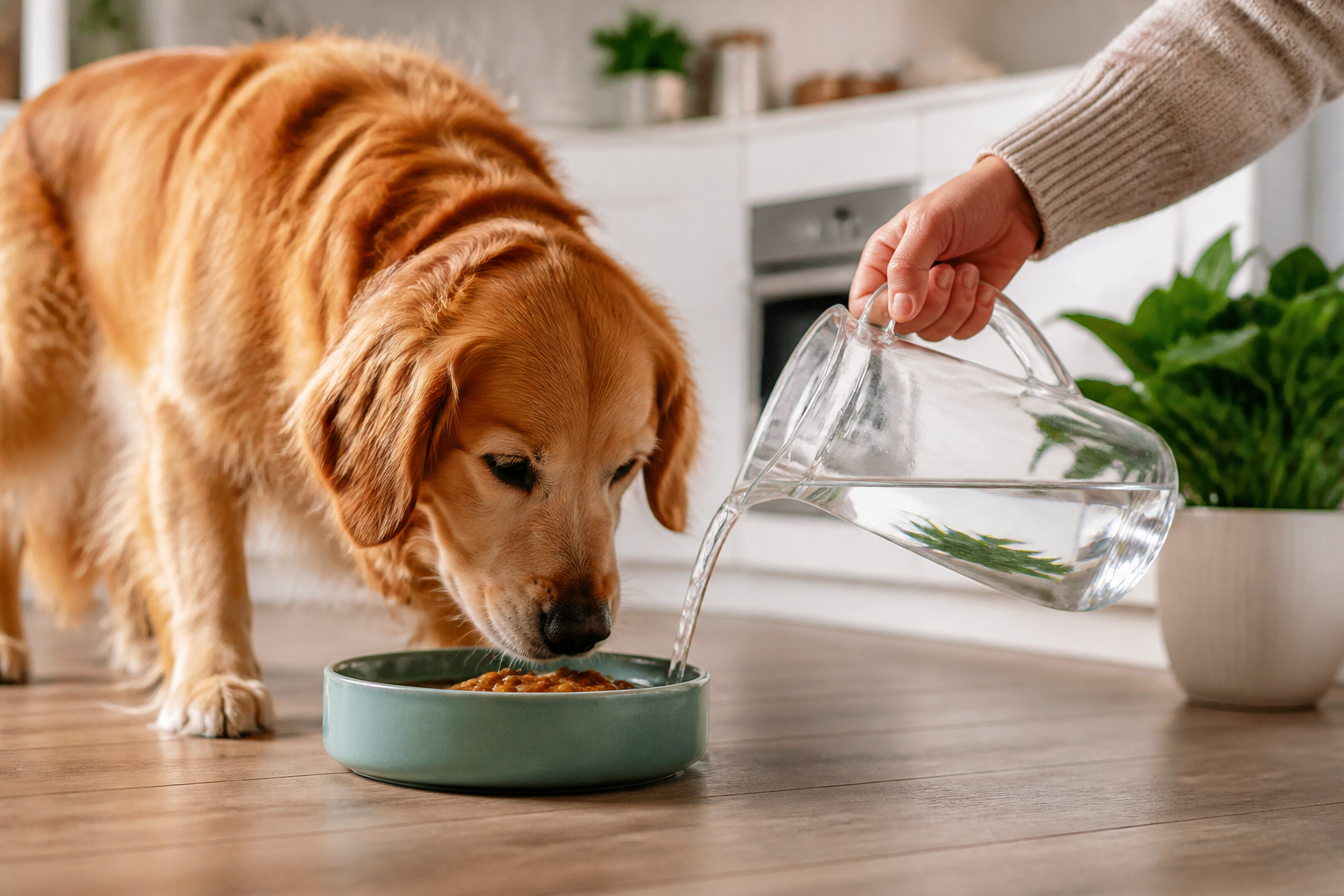
You are standing at the kitchen counter with a bag of kibble in one hand and a bowl in the other. Your dog is waiting patiently, but you notice they have been leaving a few pieces behind lately. Maybe they seem less excited about mealtime, or perhaps you are worried they are not drinking enough water from their dish. This is a common moment for many pet owners. You wonder if adding a splash of water to those crunchy nuggets would make a difference.
At BaxterBoo, we hear this question frequently from people who want to level up their dog's nutrition. Adding moisture to dry food is a simple step that can change the way your dog eats and feels. This article covers the benefits of hydration, the potential risks of spoilage, and how to do it safely for different life stages. We will help you decide if a "just add water" approach is right for your home.
The Science of Dry Kibble and Moisture
Most dry dog foods are made through a process called extrusion. This involves mixing ingredients and cooking them under high heat and pressure. The mixture is then pushed through a die to create specific shapes. Finally, the pieces are dried to remove almost all moisture. This process is excellent for shelf stability and convenience. However, it leaves the final product with very little water content, usually around 10 percent.
In the wild, a dog's ancestors ate a diet that was naturally high in moisture. When a dog eats strictly dry food, their body must work harder to process it. They often need to pull moisture from their own tissues and blood supply to help break down the starches in the stomach. If a dog is already a "lazy" drinker, this can lead to a state of mild, chronic dehydration.
Quick Answer: Adding water to dry dog food is generally beneficial for hydration, aroma, and digestion. It softens the texture for seniors and puppies while helping to prevent urinary issues in dogs that do not drink enough plain water.
Key Benefits of Hydrating Your Dog's Food
There are several practical reasons to start adding liquid to the bowl. For many dogs, the transition from a dry crunch to a softer texture solves multiple problems at once. You can compare formulas and life-stage options in our dog food category.
Improved Hydration and Urinary Health
Many dogs simply do not drink enough water from their bowls. This is especially true for certain breeds or older dogs with a diminished thirst drive. By adding water directly to the food, you ensure they get a significant amount of hydration during every meal.
Proper hydration is vital for kidney function. It helps flush out toxins and keeps the urinary tract healthy. Diluted urine is less likely to lead to the formation of crystals or stones. If your dog is managing a urinary condition, our dog pharmacy offers prescription products through our partnership with Pet's Choice that may be used alongside increased hydration.
Enhanced Palatability for Picky Eaters
Dry kibble is often coated with animal fats to make it smell good to dogs. When you add warm water, it releases those aromas and makes the meal much more enticing. The scent of "meaty fats" becomes stronger. This is a great trick for dogs that have lost interest in their standard meals due to age, illness, or general pickiness.
For another perspective on introducing moisture to meals, read how to wet dry dog food for better digestion and hydration.
Easier Digestion
Soaking the food begins the process of breaking down the starches before the food even reaches the stomach. This can be a relief for dogs with sensitive digestive systems. Instead of the stomach having to provide all the moisture to expand and dissolve the kibble, the work is already partially done. This can result in less gas and more consistent stools.
Helping the "Gulpers"
Some dogs eat so fast they barely chew. They "inhale" their kibble, which can lead to choking or regurgitation. Softening the food changes the texture so it cannot be easily vacuumed up. It forces the dog to lap up the meal, which naturally slows down the pace of eating.
Vet Tip: If your dog is a rapid eater, hydrating the food and using a slow-feeder bowl can significantly reduce the risk of digestive upset. Consult your vet if your dog consistently regurgitates food, as this may indicate an underlying esophageal issue.
When Hydrating Might Not Be Best
While there are many pros, adding water is not a perfect solution for every household. There are specific situations where you might want to stick to dry kibble.
The Risk of Spoilage
This is the most significant concern. Dry food is shelf-stable because it lacks moisture. Once you add water, you create a breeding ground for bacteria. If your dog is a "grazer" who likes to eat a few bites and come back hours later, you cannot hydrate their food.
Bottom line: Hydrated kibble must be eaten immediately or picked up within 30 to 60 minutes to prevent bacterial growth.
For additional mealtime safety guidance, see our guide to mixing dry dog food with water.
Dental Health Considerations
There is a long-standing belief that dry food cleans teeth by scraping off plaque. While this effect is often exaggerated, mushy food can stick to the teeth and gum line more easily than dry food. If you choose to hydrate your dog's meals, you should be even more diligent about their dental care routine. We carry a variety of dental toys and brushes to help keep those pearly whites clean.
The Beagle Study and Gut Health
A specific study involving Beagle dogs suggested that water-softened food might influence the gut microbiome differently than dry food. In some cases, it showed a slight increase in stress markers like cortisol. While the reasons are not entirely clear, it suggests that some dogs might prefer the routine and texture of dry food. It is always best to monitor your dog's behavior and energy levels when making a change.
How to Hydrate Dog Food Correctly
If you decide to try this, follow a consistent process to ensure the food is safe and appealing. You do not want to turn the meal into an unappealing soup unless that is what your dog specifically prefers.
Step 1: Use the Right Water Temperature
Use warm water, not boiling water. Boiling water can destroy some of the heat-sensitive vitamins and probiotics that manufacturers spray onto the kibble after the extrusion process. Warm water is perfect for releasing aromas without damaging the nutrition.
Step 2: The Right Ratio
Start with a small amount. A good starting point is one-quarter cup of water for every cup of dry food. You can adjust this based on your dog's preference. Some dogs like a "gravy" consistency, while others prefer the kibble to be fully softened into a mash.
Step 3: Wait for the Soak
Let the food sit for about 10 to 15 minutes. This gives the moisture time to penetrate the center of the kibble. If you serve it immediately, the outside will be wet, but the inside will still be hard, which might confuse some dogs.
Checklist for Safe Hydration
- Always use clean, filtered water.
- Wash the food bowl thoroughly after every hydrated meal.
- Never leave hydrated food out in warm weather or direct sunlight.
- Discard any uneaten portions after one hour.
- Monitor your dog for any changes in stool consistency.
For more preparation ideas, read tips for a healthier wet-dog-food mealtime.
Hydration for Different Life Stages
A dog's needs change as they grow, and hydrating food can be a helpful tool at both ends of the age spectrum.
Puppies and Weaning
During the weaning process, puppies transition from their mother's milk to solid food. Their tiny teeth and sensitive gums are not ready for hard rocks of kibble. Hydrating the food into a "gruel" or soft mash makes this transition much easier. It also ensures they are getting the high levels of hydration they need during rapid growth.
For age-appropriate supplies and feeding essentials, visit the Puppy Shop.
Senior Dogs and Dental Issues
Many older dogs suffer from periodontal disease, missing teeth, or sensitive gums. Eating hard kibble can actually be painful for them. Softening the food allows them to continue eating their favorite brands, like NutriSource or Royal Canin, without discomfort. Additionally, senior dogs are at a higher risk for kidney issues, making the extra water even more valuable.
You can also explore whether senior dogs should eat wet or dry food when comparing mealtime options.
Dogs with Health Conditions
For dogs managing chronic conditions, hydration is often a medical necessity. Dogs with a history of urinary stones or kidney disease benefit from "flushing" their system. If your vet has prescribed a specific diet, such as Farmina Vet Life, you can still hydrate those kibbles.
Our BaxterBoo pharmacy partnership with Pet's Choice provides access to these FDA-approved prescription diets. It is a convenient way to get the specialized nutrition your dog needs delivered right to your door.
Key Takeaway: Hydrating food is an excellent support tool for puppies during weaning and seniors with dental pain or declining thirst.
Beyond Water: Other Ways to Hydrate
You do not have to stop at plain tap water. There are many ways to add moisture that also provide a nutritional boost. Our dog food supplement collection includes several meal toppers and broth options.
Bone Broth
Bone broth is a favorite for many pet owners. It is packed with collagen and minerals that support joint health. When using bone broth, ensure it is specifically made for dogs. Human versions often contain onions and garlic, which are toxic to pets. We carry dog-safe bone broths from brands like The Honest Kitchen and Stella and Chewy's that are perfect for this.
Goat's Milk
Raw or fermented goat's milk is often called "universal milk" because it is highly digestible for dogs. It adds probiotics and enzymes to the bowl, which can help with gut health. It is a calorie-dense way to hydrate food for active dogs or those needing to gain weight.
Wet Food Toppers
If you do not want to soak the kibble entirely, adding a spoonful of canned food or a "pouch" topper can provide enough moisture to make the meal interesting. Brands like Tiki Cat, for their dog line, or Caru offer high-moisture stews that mix perfectly with dry nuggets.
For another approach, read how to switch from dry to wet dog food.
The Role of the BaxterBoo Pharmacy
Health management often goes beyond just adding water. If your dog has persistent digestive issues, skin allergies, or urinary problems, diet is only one piece of the puzzle. Through our partnership with Pet's Choice, we offer a full-service pharmacy. This allows you to manage your dog's health holistically.
You can find FDA-approved medications for chronic conditions and have them shipped alongside your favorite treats and gear. This is especially helpful for owners of senior dogs who may be on multiple supplements for joint health or cognitive support. Combining specialized prescription food with proper hydration and the right medication can significantly improve your dog's quality of life.
Making the Transition
If your dog has eaten dry kibble for years, do not switch to a bowl of soup overnight. Start by adding just a tablespoon of warm water. See how they react to the change in texture. Some dogs are very tactile and might be put off by the "slushiness" at first.
If they enjoy it, gradually increase the water over a week. Watch for any signs of digestive upset. While extra water usually helps, a sudden change in any feeding routine can cause temporary loose stools.
If you are using our Autoship programme, you can ensure you always have your dog's favorite kibble on hand. This makes it easy to maintain a consistent routine, which is the key to any successful dietary change.
Final Thoughts on Hydrated Kibble
Deciding whether to hydrate your dog's food depends on their unique needs. For the average healthy dog, it is a great way to boost hydration and make mealtimes more enjoyable. For seniors and puppies, it is often a necessity for comfort and growth. Just remember the golden rule of food safety: treat hydrated kibble like wet food and never leave it out to spoil.
By paying attention to your dog's hydration, you are taking a proactive step in their long-term wellness. Whether you are adding plain water or a nutrient-rich bone broth, your dog will likely appreciate the extra effort at their next meal.
Bottom line: Hydrating dry food is a low-cost, high-reward way to improve your dog's health, provided you maintain strict bowl hygiene and monitor their response.
FAQ
Does adding water to dry dog food cause bloat?
There is no definitive evidence that adding water causes bloat. In fact, some experts suggest that softening the food and using a slow-feeder can help prevent "gulping," which is a known risk factor for bloat. However, if your dog is a high-risk breed, always discuss feeding techniques with your veterinarian.
How long can hydrated dog food stay in the bowl?
You should treat hydrated kibble like canned food. It should not stay in the bowl for more than 60 minutes. After an hour, the moisture combined with the proteins in the food can lead to rapid bacterial growth, especially in warm environments.
Will soaking kibble help my dog lose weight?
It can help by increasing the volume of the meal. The extra water makes the dog feel fuller without adding any calories. This can be a useful strategy for dogs on a weight management plan, though it should be combined with a calorie-controlled diet.
Can I hydrate prescription dog food from the pharmacy?
Yes, most prescription kibbles can be safely hydrated. This is often recommended for dogs with kidney or urinary issues to increase their fluid intake. If your dog is on a specialized diet from our pharmacy, consult your vet to ensure the added water does not interfere with any specific dietary goals.






