
 Save 15% on your 1st Autoship learn more

 Email us
 Live Chat
 FAQs
FAQs





Introduction
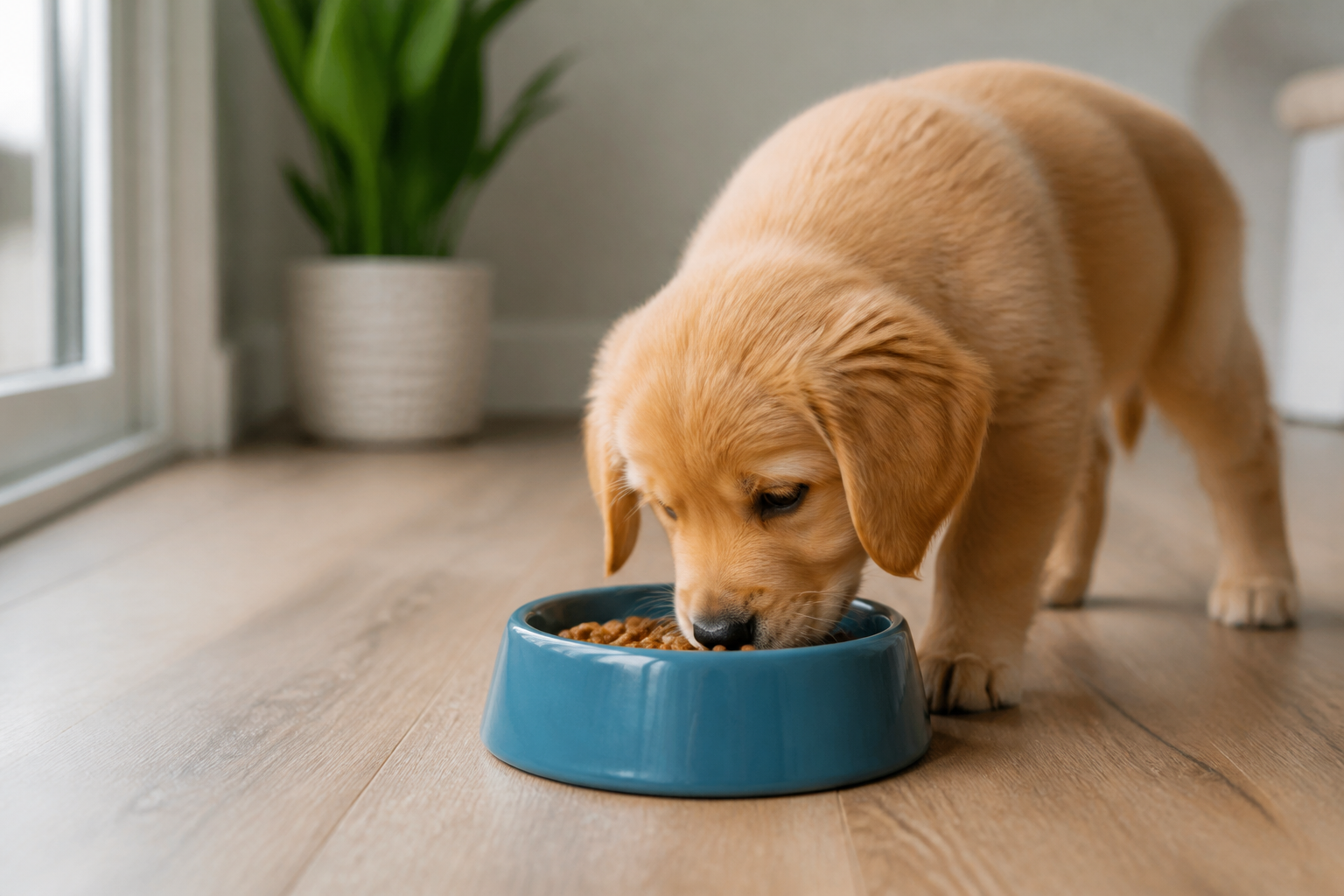
Welcoming a new puppy into your home involves plenty of excitement and a few big questions about their care. You might notice your little one sniffing at the adult dog's bowl or trying to chew on anything they can find. One of the most important milestones in these early weeks is the move from liquid nutrition to solid meals. At BaxterBoo, we understand that getting these early meals right sets the foundation for your dog's lifelong health.
This transition is not something that happens overnight. It requires a patient approach to protect their developing digestive systems and tiny teeth. We will guide you through the exact ages for introducing solids and how to soften kibble for those first bites. This article also covers the nutritional differences between puppy and adult formulas to ensure your pet gets exactly what they need. Understanding the timing of this switch helps your puppy grow at a healthy, steady pace.
Quick Answer: Most puppies can begin eating softened dry food at four weeks old. They are typically ready for hard, unsoftened dry kibble by eight to ten weeks of age.
The Early Weeks and the Weaning Process
During the first few weeks of life, a puppy gets every bit of nutrition from their mother's milk. This milk is a perfect balance of fats, proteins, and antibodies that protect them while their immune systems are still weak. If a puppy is orphaned or the mother cannot nurse, they must be bottle-fed with a specific puppy milk replacer. Our puppy milk replacer products can help in these situations.
The weaning process usually begins around three to four weeks of age. This is the moment when puppies start to explore their surroundings and may show interest in what the mother is eating. Their first baby teeth, also known as milk teeth, start to poke through the gums at this stage. These teeth are sharp but tiny. They are not yet strong enough to crunch through hard pieces of dry food.
Weaning is a gradual shift. It is not a sudden jump from milk to a bowl of hard kibble. You start by offering a very liquid mixture that feels familiar to them. As the weeks go by, you slowly reduce the amount of liquid. By the time a puppy is seven or eight weeks old, they should be getting most of their calories from solid food rather than nursing.
Step-by-Step Guide to Introducing Dry Food
When you start the transition at four weeks, the goal is to create a mushy gruel. This consistency is easy for puppies to lap up with their tongues. It also prevents them from choking on hard pieces before they know how to chew properly. For additional guidance, read our puppy weaning timeline guide.
Step 1: Choose a high-quality puppy kibble. Look for brands we carry like Royal Canin, NutriSource, or Stella and Chewy’s that are specifically formulated for growth.
Step 2: Measure out a small portion of dry food into a shallow bowl. A shallow dish makes it easier for tiny puppies to reach the food without climbing into the bowl.
Step 3: Add warm water or puppy milk replacer to the kibble. Use a ratio of about three parts liquid to one part dry food. Avoid using cow's milk, as it can cause upset stomachs and diarrhea in puppies.
Step 4: Let the mixture soak for ten to fifteen minutes. The kibble should expand and become very soft.
Step 5: Mash the soaked kibble with a fork or spoon until it reaches a consistency like oatmeal or thick soup.
Step 6: Offer this mixture to the puppies three or four times a day. Be prepared for a mess. Puppies often walk through their food or get it on their faces as they learn how to eat from a bowl.
Adjusting the Texture Over Time
Between five and seven weeks of age, you can start making the mixture thicker. Every few days, add slightly less water and leave the kibble a bit more intact. This encourages the puppy to start using those new teeth to chew.
By eight weeks old, many puppies can handle dry food that has only been lightly moistened. Some may even prefer it completely dry. However, if you notice your puppy struggling to chew or losing interest, go back to a softer consistency for a few more days. Every puppy develops at a slightly different rate.
Key Takeaway: The move to dry food should take about four to five weeks in total. Start with a soup-like consistency and slowly move toward hard kibble as the puppy's teeth grow in.
Why Specific Puppy Food is Necessary
You might wonder if you can just feed your puppy the same dry food your adult dog eats. While it might seem easier, puppies have vastly different nutritional requirements. Puppies are essentially building a body from scratch. They need more of almost everything compared to a mature dog. Browse our puppy food category to compare formulas for growing dogs.
Puppy formulas are much higher in calories. This is because puppies burn an incredible amount of energy through growth and play. They also require higher levels of protein to build muscle tissue and organs. If a puppy eats adult food too early, they might not get enough fuel to support their rapid development.
Minerals like calcium and phosphorus are also strictly balanced in puppy food. These minerals are the building blocks of bones. If the ratio is wrong, a puppy's bones might grow too fast or become too brittle. This is especially dangerous for large breeds. We carry brands like Farmina and Orijen that focus heavily on these precise nutritional balances.
The Role of DHA
Most premium puppy foods include DHA, which is an omega-3 fatty acid. This is often sourced from fish oil or algae. DHA is critical for brain and eye development. It helps puppies learn faster and improves their vision. Many adult maintenance foods do not contain high levels of DHA because a mature dog's brain is already fully developed. Our Royal Canin Medium Puppy Dry Dog Food is one growth-formulated option that includes DHA.
Feeding Frequency
Puppies have tiny stomachs but high energy needs. They cannot eat enough in one sitting to last them the whole day. We recommend feeding puppies three to four times a day until they are at least six months old. This keeps their blood sugar levels stable and ensures they get enough total calories. Our guide on how much dry dog food to feed a puppy can help with portion planning.
Vet Tip: If your puppy seems lethargic, has a bloated stomach, or develops persistent diarrhea during the food transition, consult your veterinarian. These can be signs of parasites or a digestive system that is struggling with the new diet.
Breed Size and Growth Rates
One of the most important factors in deciding when to feed dry food and which formula to use is the size of the dog. A Chihuahua grows at a much different speed than a Great Dane. At BaxterBoo, we emphasize choosing a food that matches your puppy's expected adult weight.
Small and Toy Breeds
Small breed puppies reach their full size very quickly. Many are considered adults by the time they are nine or ten months old. Because they have tiny mouths, they need a smaller kibble size. Small breed puppy foods are also very nutrient-dense. These little dogs have high metabolic rates and need a lot of energy packed into small meals.
Large and Giant Breeds
Large breed puppies stay puppies for much longer. A giant breed like a Mastiff might not be fully grown until they are two years old. It is vital that these dogs do not grow too fast. If a large breed puppy gains weight too quickly, it puts massive strain on their developing joints. This can lead to lifelong issues like hip dysplasia.
Large breed puppy foods, such as those from Royal Canin or Purina, have lower fat content and very specific calcium levels. This encourages slow and steady growth. These puppies should stay on large-breed-specific puppy food much longer than a small dog would stay on their starter food. For example, NutriSource Large Breed Puppy Chicken Meal & Rice Recipe Dry Dog Food is formulated for puppies expected to weigh more than 50 pounds as adults.
| Breed Size | Expected Adult Weight | Age to Switch to Adult Food |
|---|---|---|
| Toy / Small | Under 20 lbs | 9–10 Months |
| Medium | 21–50 lbs | 12 Months |
| Large | 51–90 lbs | 12–18 Months |
| Giant | Over 90 lbs | 18–24 Months |
Managing the Switch to Adult Dry Food
The question of when a puppy can eat dry food also applies to the move from puppy kibble to adult kibble. As shown in the table above, the timing depends on the breed. Switching too early can deprive a growing dog of essential nutrients. Switching too late can lead to obesity because puppy food is so calorie-rich.
When it is time to make the switch, do it slowly over seven to ten days. A sudden change in diet is the most common cause of stomach upset in dogs. Our article on choosing the best dry dog food offers additional guidance when comparing formulas.
Step 1: For the first two days, mix 25 percent of the new adult food with 75 percent of the puppy food.
Step 2: For the next two days, move to a 50/50 mix.
Step 3: On days five and six, use 75 percent adult food and 25 percent puppy food.
Step 4: By day seven, your dog should be eating 100 percent adult dry food.
Monitor your dog's stool during this week. If the stool becomes soft, slow down the transition. Stay at the current mix for an extra two days before increasing the amount of new food.
Health Concerns and Special Diets
Sometimes, the standard weaning process does not go as planned. Some puppies have extremely sensitive stomachs or develop allergies early in life. You might notice skin redness, excessive itching, or chronic loose stools. In these cases, a standard over-the-counter puppy food might not be the best fit.
Our pharmacy carries a variety of FDA-approved prescription pet foods for these specific situations. Through our partnership with Pet's Choice, we can help you fulfill prescriptions for therapeutic diets. These foods are formulated to manage specific conditions like gastrointestinal disease or severe food sensitivities. If your veterinarian recommends a prescription diet to help your puppy grow safely, we can help you get those specialized meals delivered to your door.
The Importance of Hydration
While dry food is convenient and great for dental health, it contains very little moisture. Puppies can become dehydrated easily, especially if they are active or the weather is warm. Always ensure your puppy has access to a bowl of fresh, clean water. If your puppy is a poor drinker, you can continue to add a splash of water or a little bit of wet food to their dry kibble to increase their fluid intake. Our guide to wetting dry dog food for better digestion and hydration covers additional preparation tips.
Bottom line: Dry food is a great choice for puppies once they have their teeth, but supplemental hydration remains a priority for their health.
Benefits of Dry Kibble for Puppies
Choosing dry food as your puppy's primary diet offers several practical advantages. Many owners prefer it because it is easy to store and stays fresh longer in the bowl than wet food. From a value perspective, dry food is often the most economical way to provide high-quality nutrition.
One major benefit is dental health. As puppies chew the hard kibble, the mechanical action helps to scrape away some of the plaque forming on their teeth. While it does not replace the need for regular dental care or tooth brushing, it is a helpful daily tool.
Dry kibble is also excellent for training. Because it is not messy, you can use individual pieces of your puppy's daily food allowance as rewards during training sessions. This prevents you from overfeeding treats, which can unbalance their nutrition. We often suggest using a portion of their breakfast or dinner for practicing "sit" or "stay" throughout the day.
Using Puzzle Toys
Puppies are curious and need mental stimulation. Dry food is perfect for use in puzzle toys and slow feeders. Instead of eating from a standard bowl, you can put the kibble inside a toy that the puppy has to wobble or chew to release the food. This slows down fast eaters and gives them a productive way to burn off mental energy. Brands like Kong offer many durable options that are perfect for this.
Signs Your Puppy is Ready for More Solids
As you watch your puppy grow, certain behaviors will tell you they are ready to move away from softened food. If you see them trying to steal a piece of the adult dog's hard kibble, their jaw strength is likely improving. You will also notice them spending more time chewing on their toys rather than just licking them.
Check their teeth regularly. Once the full set of sharp puppy teeth is visible, they have the tools they need to break down hard food. If they are eating their softened food very quickly and seem hungry for more, it might be time to increase the density of the food and reduce the water content. Our article on when puppies can eat dry dog food provides another look at these signs.
Monitoring Body Condition
It is a common mistake to think a "chunky" puppy is a healthy puppy. While a little bit of puppy fat is normal, being overweight is dangerous for their joints. You should be able to feel your puppy's ribs easily under a thin layer of fat, though you should not see them sticking out. They should have a visible waist when you look down at them from above.
If your puppy is growing too fast or seems to be gaining too much weight, talk to your vet about adjusting their portions. Using the feeding guide on the back of the bag is a great starting point, but every puppy has a different activity level.
Key Takeaway: Use your puppy's teeth development and interest in chewing as cues to move toward unsoftened dry food.
Summary of Feeding Milestones
To keep your puppy on the right track, follow these general age guidelines for their diet.
- Birth to 3 Weeks: Exclusive nursing or bottle-feeding with puppy milk replacer.
- 4 Weeks: Start introducing a very thin, watery gruel of puppy kibble and water.
- 5 to 6 Weeks: Gradually thicken the gruel as the puppy gets better at lapping and chewing.
- 7 to 8 Weeks: The puppy should be mostly weaned and eating significantly thickened or slightly moistened kibble.
- 8 to 10 Weeks: Most puppies can transition to completely dry, unsoftened puppy kibble.
- 6 to 12 Months: Consult your vet about the right time to transition to adult maintenance food based on breed size.
At BaxterBoo, we have been helping pet parents navigate these stages since 2006. Our curated selection of over 500 brands ensures you can find the right fit for your puppy's specific needs. Whether you need a standard high-protein puppy food or a prescription diet through our pharmacy, we are here to support your journey.
Consider signing up for our Autoship program for your puppy's food. It ensures you never run out during those critical growth months. Plus, you get savings on your first order and a free MVP Gold membership, which earns you points back on every purchase. Feeding a puppy is a big responsibility, but with the right timing and quality food, you are setting them up for a long, happy life by your side.
FAQ
Can I feed my 6 week old puppy dry food without water?
At six weeks old, most puppies still need their dry food to be softened with some water or milk replacer. Their teeth are still developing, and their jaws are not yet strong enough to comfortably crunch through hard kibble. Most experts recommend waiting until at least eight weeks of age before offering completely dry food.
What happens if I switch my puppy to adult food too early?
Switching to adult food too early can lead to nutritional deficiencies because adult food lacks the high calorie and protein levels puppies need. It also often has a different balance of calcium and phosphorus, which can cause bone and joint abnormalities in growing dogs. If your puppy accidentally eats adult food once or twice, it is usually fine, but it should not be their daily diet.
Why won't my puppy eat their dry food?
A puppy might refuse dry food if it is too hard for their teeth, if they have a dental issue, or if they are simply not feeling well. Try adding a bit of warm water or a small amount of wet food to see if the texture is the problem. If your puppy misses more than two meals or seems lethargic, you should contact your veterinarian immediately to rule out illness.
Is it better to feed my puppy wet or dry food?
Both types of food have benefits, and many owners choose to feed a mix of both. Dry food is generally more affordable, better for dental health, and easier to use for training. Wet food is often more palatable for picky eaters and provides extra hydration. The most important factor is ensuring the food is labeled as "complete and balanced" for the growth stage by AAFCO.






