
 Save 15% on your 1st Autoship learn more

 Email us
 Live Chat
 FAQs
FAQs





Introduction
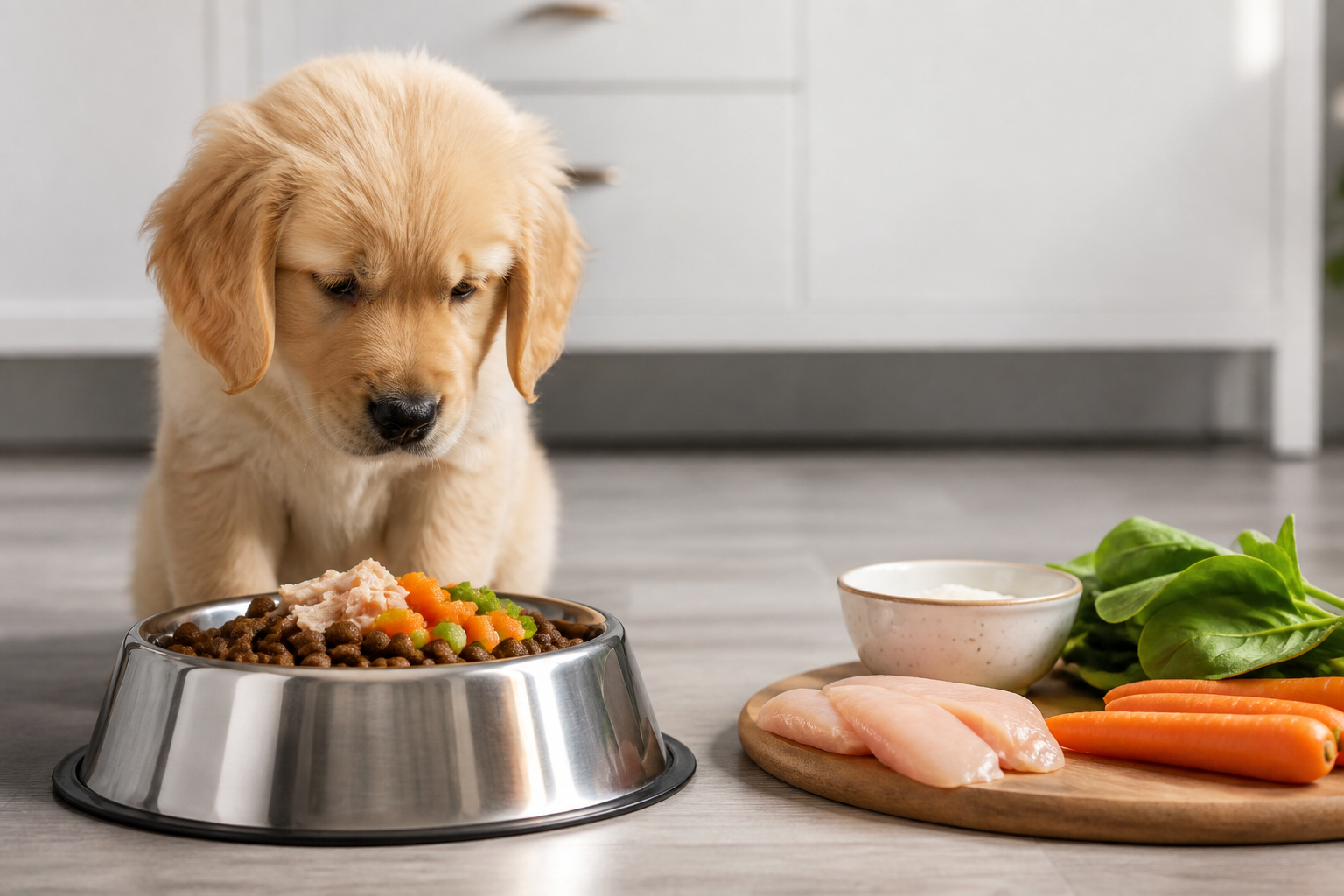
Watching a new puppy stare at a bowl of dry kibble without interest is a common worry for many owners. You want to ensure your new companion gets every calorie and nutrient needed for their rapid growth. While high-quality dry food provides a balanced foundation, adding fresh or wet mixers can improve hydration, boost nutrition, and make mealtime much more exciting. At BaxterBoo, we have spent years helping pet parents navigate the transition from weaning to adult diets with practical, expert advice. This article covers safe liquids, healthy fresh foods, and commercial toppers that you can use to enhance your puppy's meals. Our goal is to help you build a bowl that supports healthy development and keeps your pup coming back for more.
Quick Answer: You can safely mix warm water, low-sodium bone broth, or canned puppy food into dry kibble to improve taste and hydration. Other healthy additions include scrambled eggs, plain yogurt, and pureed pumpkin, provided these extras make up no more than 10 percent of your puppy's daily calorie intake.
The Importance of Puppy-Specific Nutrition
Puppies are not just small dogs. Their bodies are working overtime to build bone, muscle, and brain tissue. Because of this, their nutritional requirements are much higher than those of an adult dog. When you start thinking about what can be mixed with dry dog food for puppies, the most important rule is to ensure the base remains a "complete and balanced" puppy formula. Our puppy food collection is a helpful place to compare growth-focused options.
Most dry puppy foods are calorie-dense and contain specific ratios of calcium and phosphorus. If you add too many "human" foods or random toppers, you risk unbalancing those ratios. This can lead to growth issues, especially in large-breed puppies. We recommend that any extras you add to the bowl stay under 10 percent of the total daily calories. This keeps the primary nutrition coming from the formulated puppy food while providing the variety you want.
Key Takeaway: Always use a high-quality dry kibble formulated specifically for puppies as your base to ensure they get the correct balance of calcium and minerals for growing bones.
Hydrating the Kibble With Safe Liquids
One of the easiest ways to improve dry food is to add liquid. This is particularly helpful for puppies who are still teething. Their gums can be sensitive, and hard kibble might be uncomfortable to crunch. Adding liquid softens the bits and releases the aroma of the food, making it more enticing.
Using Warm Water
Filtered warm water is the simplest and safest mixer. It costs nothing and carries zero risk of digestive upset. When you add warm water to kibble, let it sit for a few minutes. This creates a soft texture and a natural "gravy" from the coatings on the dry food. It is also an excellent way to ensure your puppy stays hydrated, especially during hot summer months. For more weaning guidance, read our guide to when puppies can start eating dry dog food.
Bone Broth for Dogs
Bone broth is packed with collagen and minerals that support joint health and digestion. However, you should never use store-bought bone broth intended for humans. Those often contain onions, garlic, and high levels of sodium, all of which are dangerous for puppies. Look for pet-specific bone broths or make your own at home using only bones and water.
Goat's Milk
Many puppies tolerate goat's milk better than cow's milk. It is rich in probiotics and electrolytes. Adding a splash of goat's milk to dry food provides a creamy texture and a massive flavor boost. It is often referred to as a "superfood" for pets because it supports the immune system and gut health during the critical early months of life.
Vet Tip: If your puppy has persistent diarrhea or a sensitive stomach, consult your veterinarian before adding rich liquids like goat's milk or broth. They may recommend a prescription digestive diet or specific probiotics available through our pharmacy.
Mixing Wet and Dry Puppy Food
Adding canned or wet puppy food to dry kibble is a popular method called "mixed feeding." This gives your puppy the best of both worlds: the dental benefits of chewing dry kibble and the high protein and moisture content of wet food. Our dog food category includes dry, wet, and other feeding options.
When mixing wet and dry, ensure both products are labeled for puppies. Adult wet food lacks the necessary fat and protein levels for a growing dog. You can use a variety of textures to keep things interesting:
- Pate: A smooth, uniform texture that is easy to mix thoroughly into kibble so the puppy cannot pick out the "good stuff."
- Stew: Features chunks of meat and vegetables in a savory gravy, perfect for pouring over the top of the bowl.
- Shreds: Thin strips of muscle meat that provide a different mouthfeel and encourage chewing.
If you choose to mix wet and dry food regularly, our Autoship programme is a great way to ensure you never run out of either. You can set a recurring delivery schedule and save on every order, which is helpful since puppies eat a lot as they grow.
Healthy Fresh Food Additives
If you want to use whole foods from your own kitchen, there are several puppy-safe options. These should be introduced one at a time so you can monitor your puppy for any signs of an upset stomach or allergies. For additional guidance on selecting a puppy formula, see our article on the best dry dog food for puppies.
Eggs
Eggs are one of the most complete sources of protein you can give a puppy. They contain essential amino acids and fatty acids that support skin and coat health. You can offer them scrambled, hard-boiled, or poached. Most experts suggest cooking the eggs to avoid the risk of salmonella and to make the whites more digestible for young dogs.
Plain Yogurt or Kefir
A dollop of plain, unsweetened yogurt can provide a boost of probiotics. This is especially helpful if your puppy has recently been on antibiotics. Ensure the yogurt contains no artificial sweeteners, especially Xylitol, which is toxic to dogs. Stick to plain, non-fat or low-fat versions.
Pureed Pumpkin
Plain canned pumpkin (not pumpkin pie filling) is a miracle worker for puppy digestion. It is high in fiber and can help with both constipation and mild diarrhea. It also tastes great to most dogs. A teaspoon or two mixed into the kibble is usually enough for a small puppy.
Lean Meats
You can add small amounts of cooked, unseasoned chicken, turkey, or lean beef to the bowl. Make sure the meat is cut into very small pieces to prevent choking. Avoid processed meats like deli ham or hot dogs, as these contain too much salt and preservatives for a puppy's developing kidneys.
Bottom line: Fresh food additives should be used as occasional treats or small toppers, never as a replacement for the balanced nutrients found in puppy-specific kibble.
Fruits and Vegetables as Toppers
Many puppies enjoy the crunch and sweetness of fresh produce. These are low-calorie ways to add vitamins and antioxidants to the meal. For puppies, it is often best to puree or finely chop vegetables to help them digest the plant fibers more easily.
Safe Produce for Puppies Checklist:
- Carrots: Great for teething when served cold or frozen.
- Blueberries: High in antioxidants and easy to mash into kibble.
- Green Beans: A low-calorie "filler" that provides good fiber.
- Apples: Sliced thin without seeds or the core.
- Steamed Broccoli: Use in small amounts to avoid gas.
Avoid feeding your puppy onions, garlic, grapes, raisins, or avocados. These can cause serious health issues ranging from red blood cell damage to kidney failure. If you are ever unsure about a specific fruit or vegetable, it is best to skip it and stick to known safe options.
Commercial Meal Mixers and Toppers
The pet food industry has created a wide range of products specifically designed to be mixed with dry food. These are often more convenient than cooking fresh food and are formulated to be nutritionally compatible with high-quality kibble. Our freeze-dried food topper selection offers several convenient options.
Freeze-Dried Raw Mixers
Brands like Stella and Chewy's or Instinct offer freeze-dried raw morsels. These provide the nutritional benefits of raw meat in a shelf-stable, convenient form. You can crumble them over the kibble or rehydrate them with a little water to create a fresh-tasting meal. They are usually very high in protein, which is excellent for active, growing puppies. You can also browse our selection of Stella & Chewy's products.
Bone Broth Toppers
Many companies now sell "pour-overs" or broths in easy-to-use pouches. These are often enhanced with functional ingredients like turmeric for inflammation or ginger for digestion. They are a mess-free way to hydrate kibble and add a burst of flavor.
"Dinner Dust" or Sprinkles
If you have an exceptionally picky eater, you might try a flavored powder or "dust." These are usually made from ground-up freeze-dried meats and organs. You only need a small sprinkle to coat the kibble and make the entire bowl smell irresistible to your puppy. For more information about using freeze-dried food as a topper, read how much freeze-dried dog food to feed your pet.
Transitioning and Monitoring Your Puppy
When you begin mixing new items into your puppy's dry food, do it slowly. Puppies have very sensitive digestive systems. A sudden change in diet or a large amount of a new "human" food can cause vomiting or diarrhea. Start with a tiny amount of the mixer and wait 24 hours to see how your puppy reacts.
If your puppy experiences frequent digestive upset, it might not be the food itself. It could be an underlying sensitivity or a need for a specific therapeutic diet. We carry several premium brands like Farmina Vet Life and Royal Canin that offer specialized formulas. Through our pharmacy, you can also access prescription diets and medications if your veterinarian determines your puppy has a specific health condition like food allergies or chronic GI issues.
Vet Tip: Monitor your puppy's weight and body condition score regularly. Puppies should be lean but not bony. If you notice rapid weight gain after adding mixers, reduce the amount of kibble or the frequency of the toppers.
Safety Precautions and Banned Foods
While experimenting with what can be mixed with dry dog food for puppies is fun, safety must come first. There are several common foods that should never enter your puppy's bowl.
- Xylitol: This artificial sweetener is found in many peanut butters and yogurts. It is extremely toxic to dogs and can cause life-threatening low blood sugar and liver failure.
- Cooked Bones: Never mix cooked bones from your dinner into your puppy's food. Cooked bones become brittle and can splinter, causing punctures in the digestive tract.
- Onions and Garlic: These can cause oxidative damage to a dog's red blood cells, leading to anemia.
- High-Fat Scraps: Fatty trimmings from steak or bacon can trigger pancreatitis, a painful and dangerous inflammation of the pancreas.
Always read labels carefully on any store-bought mixers. Look for "hidden" ingredients like salt, sugar, and artificial dyes. The best mixers are those with short, recognizable ingredient lists.
Managing Picky Eaters
Sometimes, a puppy's refusal to eat dry food is a behavioral stage rather than a lack of hunger. If you start adding high-value mixers every time your puppy hesitates, they may quickly learn to "hold out" for the better stuff. This can create a lifelong picky eater. Our guide to dry dog food for picky eaters explores additional approaches.
To avoid this, try these strategies:
- The 15-Minute Rule: Put the food down for 15 minutes. If they do not eat, pick it up and try again at the next scheduled mealtime.
- Consistent Schedule: Feed your puppy at the same times every day to regulate their appetite.
- Limit Treats: If your puppy is getting too many training treats throughout the day, they may not be hungry for their kibble.
- Exercise: A tired puppy is a hungry puppy. Ensure they are getting enough play and exploration time before meals.
If your puppy's appetite suddenly drops or they refuse food for more than 12 to 24 hours, contact your veterinarian. Loss of appetite in a puppy can be a sign of illness, parasites, or infection.
Summary of Puppy Food Mixers
Enhancing your puppy's dry food is a great way to provide variety and ensure they stay hydrated. Whether you choose a simple splash of warm water or a high-protein freeze-dried topper, the goal is to support their growth without unbalancing their core nutrition.
- Best for Hydration: Warm water or low-sodium bone broth.
- Best for Protein Boost: Scrambled eggs or freeze-dried raw mixers.
- Best for Digestion: Plain pumpkin puree or goat's milk.
- Best for Picky Eaters: Canned puppy food or meat-based "dinner dust."
At BaxterBoo, we carry a wide range of puppy-safe foods and toppers from trusted brands like Stella and Chewy's, Kong, and Open Farm. By being thoughtful about what you add to the bowl, you can help your puppy develop into a healthy, happy adult dog.
Conclusion
Mixing your puppy's dry food doesn't have to be complicated or expensive. By using simple ingredients like warm water, eggs, or puppy-specific canned food, you can create a meal that is both nutritious and delicious. Remember to keep all extras under 10 percent of the total daily calories and always prioritize puppy-specific formulas to support their unique growth needs. If your puppy has specific health concerns or ongoing digestive issues, our pharmacy offers a reliable way to get the prescription diets and support your vet recommends. Start with small amounts, monitor your pup's reaction, and enjoy watching them thrive.
For all your puppy needs, from high-quality kibble to healthy meal toppers, explore our full collection of dog food and supplies. Our MVP Rewards program also helps you earn back on every purchase, making it easier to provide the best for your new best friend.
FAQ
Is it okay to mix wet and dry food for puppies every day?
Yes, you can mix wet and dry food every day as long as both are formulated for puppies. This provides a balance of textures and increases hydration, which is beneficial for growing dogs. Just be sure to adjust the total amount of food to prevent overfeeding and excessive weight gain. For more transition advice, read how to switch from dry to wet dog food.
Can I add human tuna to my puppy's dry food?
While a tiny bit of plain tuna packed in water is generally safe as an occasional treat, it should not be a regular mixer. Tuna can be high in mercury and often contains added salt that is not healthy for puppies. If you want to add fish, choose puppy-specific canned foods or small amounts of cooked salmon instead.
What is the best liquid to soften puppy kibble?
Warm filtered water is the best and safest liquid for softening kibble. It releases the food's natural aromas without adding calories or sodium. If you want more flavor, a pet-safe bone broth or a splash of goat's milk are also excellent options that provide additional nutrients.
How much extra food can I add to my puppy's kibble?
You should follow the "10 percent rule," which means that all treats, toppers, and mixers should make up no more than 10 percent of your puppy's total daily calorie intake. This ensures that the bulk of their nutrition comes from their balanced puppy kibble, which contains the specific vitamins and minerals they need for growth.






