
 Save 15% on your 1st Autoship learn more

 Email us
 Live Chat
 FAQs
FAQs





Introduction
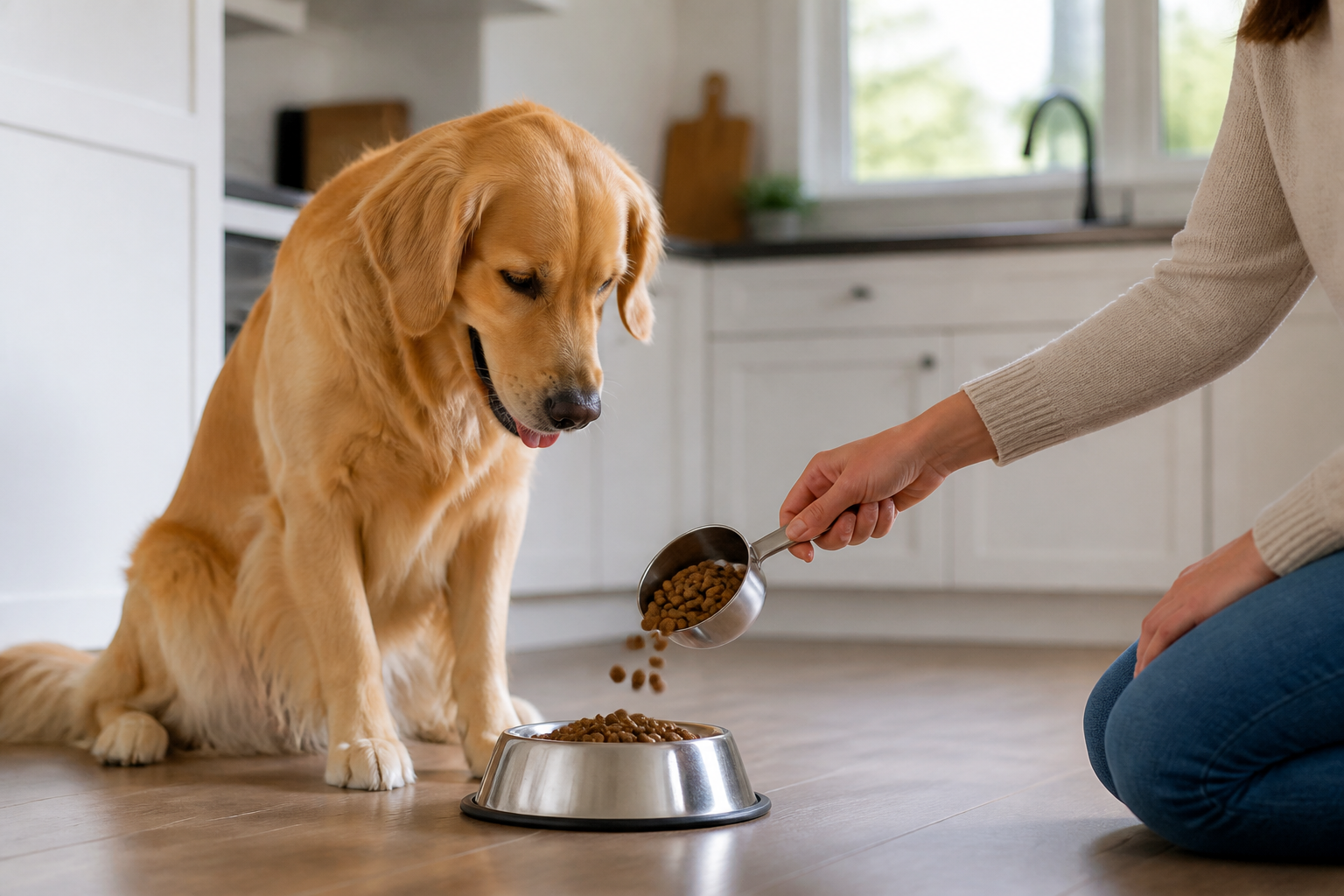
You stand at the kitchen counter with a plastic scoop in one hand and a bag of kibble in the other. You wonder if that slightly rounded cup is actually what your dog needs or if you are accidentally overfeeding. Most feeding instructions on the back of the bag use volume measurements like cups, which can be surprisingly inaccurate. A cup of one brand might weigh 90 grams while another weighs 120 grams, leading to significant calorie differences.
At BaxterBoo, we know that precision is the secret to helping your dog maintain a healthy weight and vibrant energy. This post covers how to calculate exactly how many grams of dry food for dog daily requirements, why weight is better than volume, and how to adjust for your pet’s life stage. Getting the gram count right is one of the most effective ways to support your dog’s long term wellness and prevent obesity.
Why Grams Beat Cups Every Time
Many dog owners rely on a standard measuring cup or a random coffee mug to dish out meals. The problem is that kibble size and shape vary wildly. Small, dense nuggets pack tightly into a cup, while large, airy heart-shaped kibbles leave lots of empty space. If you measure by volume, you might be off by 20 percent or more in either direction.
Using a digital kitchen scale removes the guesswork. When you weigh food in grams, you provide a consistent caloric intake every single day. This is especially important for small breeds like Chihuahuas or Toy Poodles. For a ten pound dog, an extra ten grams of food is a much larger percentage of their daily diet than it is for a Lab.
Quick Answer: Most adult dogs require roughly 15 to 25 grams of dry food per kilogram of body weight. However, this varies based on the calorie density of your specific food and your dog's activity level.
For more guidance on comparing volume and weight, read our guide to how much a cup of dry dog food weighs.
Factors That Influence Your Dog's Daily Grams
No two dogs have the exact same metabolic rate. If you have two Golden Retrievers from the same litter, one might be a couch potato while the other runs three miles a day. You cannot feed them the same amount and expect them both to stay fit.
Age and Growth Phase
Puppies are metabolic engines. They need more grams of food per pound of body weight than adults because they are building bone, muscle, and organ tissue. Senior dogs often need fewer grams because their metabolism slows down and they move less.
For more help with puppy feeding schedules and portions, explore our guide to how many cups of dry dog food puppies need each day.
Activity Level
A working dog or a high energy athlete burns through calories quickly. These dogs may need 20 to 40 percent more food than a sedentary household pet. If your dog spends most of the day napping, their gram count should stay at the lower end of the recommended range.
Spay and Neuter Status
Research shows that spaying or neutering a dog can lower their metabolic rate. Once a dog is fixed, they typically require about 20 percent fewer calories than they did before. If you do not adjust their daily grams after the procedure, you may notice them gaining weight quickly.
Vet Tip: If your dog is suddenly gaining weight despite no changes in food grams, consult your veterinarian to rule out thyroid issues or other metabolic conditions. Our pharmacy at BaxterBoo offers prescription support for chronic health needs through our partnership with Pet's Choice.
Calculating the Resting Energy Requirement (RER)
If you want to be very precise, you can calculate your dog’s Resting Energy Requirement. This is the number of calories their body needs just to perform basic functions like breathing and digestion.
The most common formula is 70 multiplied by the dog's body weight in kilograms raised to the 0.75 power. Most owners find it easier to use an online calorie calculator. Once you have the calorie number, look at your bag of food to see the "kcal/kg" or "kcal/cup" rating.
If your dog needs 600 calories a day and your food has 400 calories per 100 grams, you would feed 150 grams per day. Dividing this into two or three meals keeps their energy levels stable.
Common Gram Estimates by Weight
While every food brand is different, here are some general starting points for healthy adult dogs:
- 5 lbs: 45 to 60 grams
- 10 lbs: 75 to 100 grams
- 20 lbs: 125 to 160 grams
- 50 lbs: 250 to 320 grams
- 70 lbs: 350 to 440 grams
Key Takeaway: Gram measurements ensure your dog gets the exact calories they need, preventing the slow weight creep that often happens with volume measuring.
For additional portion guidance, see our article on how much dry food to feed a dog for daily health.
Feeding Puppies: The Growth Gram Scale
Puppies cannot be fed on a static schedule. Their needs change almost weekly as they hit growth spurts. Most puppy food manufacturers provide a chart based on the puppy's expected adult weight.
Step 1: Determine your puppy's current age in months and their expected weight at maturity. Step 2: Locate the daily gram total on the package for that specific cross section. Step 3: Divide that total by the number of meals you are feeding. Step 4: Weigh the food on a scale for every single meal.
For very young puppies under four months, we usually suggest four meals a day. From four to six months, you can move to three meals. After six months, most dogs do well on two meals per day.
How to Read the Bag Label Correct
The feeding table on the back of your dog food bag is a legal requirement. It is designed by nutritionists to provide a baseline for a moderately active dog. However, these guides are often generous. Manufacturers do not want your dog to be underweight, so they may lean toward the higher end of the scale.
Check if the bag lists grams specifically. Most premium brands like Farmina, Royal Canin, or Orijen will include a gram column next to the cup measurement. Always use the gram column if it is available. If it only lists cups, use a conversion of approximately 100 to 110 grams per cup as a starting point.
You can compare formulas and feeding information in our dry dog food category.
Adjusting for Weight Management
If your dog needs to lose weight, do not just guess. You should feed for the weight you want them to be, not the weight they are currently. If your 50 pound dog should be 40 pounds, look at the 40 pound feeding guide.
Vet Tip: For dogs with significant weight issues or allergies, a prescription diet may be necessary. We carry FDA approved prescription foods and medications through our BaxterBoo pharmacy partnership with Pet's Choice, which can help manage specific health goals under veterinary supervision.
For more ideas about portion control and weight goals, read our practical guide to pet weight management.
The Treat Tax: Adjusting Your Grams
Treats count toward the daily calorie total. If you are training a new dog and using a lot of rewards, you must reduce their mealtime grams. This is the "treat tax."
A good rule of thumb is that treats should never make up more than 10 percent of your dog’s daily calories. If you give a large dental chew or a stuffed Kong toy, subtract that caloric value from the evening bowl of food. You can also set aside a portion of their daily weighed kibble to use as training treats throughout the day.
Transitioning to a New Gram Count
If you decide to switch from measuring by cups to measuring by grams, do it gradually. Your dog's digestive system likes consistency.
- Day 1-2: Weigh your current "cup" amount to see how many grams you have actually been feeding.
- Day 3-4: Adjust the weight by no more than 10 percent if your dog needs a change.
- Day 5-7: Monitor your dog's energy and stools.
If the stools stay firm and your dog seems satisfied, you have found a good baseline. If they seem frantically hungry or start begging more than usual, you may need to increase the grams slightly or add low calorie bulk like green beans.
For another explanation of the process, follow our guide to transitioning your dog to weighed food portions.
Signs You are Feeding the Right Amount
The scale is a tool, but your dog's body is the best indicator. You should perform a "rib check" every two weeks. You should be able to feel your dog's ribs easily under a thin layer of skin, but they should not be visible from a distance.
When looking down at your dog from above, they should have a visible waist. There should be a clear tuck behind the ribcage. If your dog looks like a solid rectangle or an oval, they are likely getting too many grams of food per day.
Checklist for Success
- Use a digital scale that measures in grams.
- Adjust portions every six months as the dog ages.
- Subtract treat calories from the daily total.
- Consult a vet if your dog’s activity level changes drastically.
- Store dry food in the original bag to keep the feeding chart handy.
Special Considerations for Senior Dogs
As dogs enter their golden years, their lean muscle mass often decreases while body fat increases. This shift in body composition means they burn fewer calories even if they are still somewhat active. Senior formulas often have fewer grams of fat and more fiber to help them feel full.
If your senior dog is struggling with mobility, they may be less inclined to walk to the bowl or stand for long periods. You might find that smaller, more frequent meals are easier for them to manage. High quality senior foods from brands like NutriSource or Stella and Chewy's are often formulated with these metabolic shifts in mind.
For related guidance, read about whether senior dogs should eat wet or dry food.
Key Takeaway: Senior dogs require a "less is more" approach to grams, focusing on high quality protein and joint support rather than high caloric density.
When to Consult Your Veterinarian
While blog guides are helpful for healthy dogs, some situations require a professional. If your dog has a chronic illness like diabetes or kidney disease, their gram count and nutrient balance are critical. These dogs often require prescription diets that are strictly measured.
Our pharmacy at BaxterBoo is a resource for owners managing these complex needs. Through our partnership with Pet's Choice, we offer access to FDA approved medications and specialized diets that can be shipped directly to your door. This is often the best path for dogs with ongoing health struggles that impact their appetite or weight.
Bottom line: Feeding by weight rather than volume is the most accurate way to keep your dog at their ideal body condition.
Summary of Feeding by Weight
Switching to grams might feel like an extra step in your morning routine, but it pays off in long term health. It prevents the subtle overfeeding that leads to joint pain, heart issues, and a shorter lifespan.
- Precision: Grams provide a consistent calorie count.
- Flexibility: Easily adjust for activity or age.
- Health: Helps maintain the ideal body condition score.
- Value: Stops you from wasting food by over-pouring.
Conclusion
Determining how many grams of dry food for dog daily needs is a simple habit that yields massive results. By moving away from the "scoop and hope" method, you take control of your pet's nutrition. Whether you have a growing puppy or a napping senior, weighing their meals ensures they get exactly what they need and nothing they don't.
We are here to help you every step of the way with a massive selection of premium foods and a dedicated pharmacy for specialized health needs. If you want to make sure you never run out of your dog's favorite food, our Autoship programme offers savings and ensures your scale never stays empty. Start weighing your dog's food today to see the difference it makes in their coat, energy, and waistline.
FAQ
How many grams are in one cup of dry dog food?
On average, one standard metric cup of dry dog food weighs between 100 and 120 grams. This number changes based on the density of the kibble and the size of the individual pieces. You should always weigh a cup of your specific brand to get an accurate conversion.
Why does my dog's food bag only give measurements in cups?
Many manufacturers use cups because they are a familiar measurement for US consumers. However, more premium brands are now including gram weights to help owners be more precise. If your bag only lists cups, you can use a kitchen scale to determine the weight of a level cup of that specific formula.
Should I feed my dog more grams if they are very active?
Yes, highly active dogs or working breeds often require 20% to 40% more food than the standard feeding chart suggests. You should monitor their body condition score weekly and increase the daily grams if you can see their ribs too clearly. Always make adjustments in small increments of 10% to 15% at a time.
How do I adjust food grams if I mix in wet food?
If you want to feed a 50/50 mix, you should take the daily gram recommendation for the dry food and cut it in half. Then, take the daily recommendation for the wet food and cut that in half as well. This ensures your dog is getting the correct total calories without being overfed by doubling up on portions.






